Tag Archive: proware

  1. Sea Truffle Salt Baked Chicken by Carters of Moseley

    Comments Off on Sea Truffle Salt Baked Chicken by Carters of Moseley

    We have been lucky enough to collaborate with Michelin Starred Chef Brad Carter and his team at Carters of Moseley to bring you this fabulous recipe.

    Unsurprisingly there has been no compromise in selecting some of the best local ingredients for the recipe. Carters have used Caledcott’s Cotswold White free range chicken and Droitwich Sea Truffle Salt produced by Churchfields Saltworks.

    Salt-baking the chicken helps it maintain moisture and results in an incredibly intense flavour. Combined with the black garlic mayonnaise, glazed offal and the leek and onion this dish is guaranteed to delight.

    Carters have also taken the hassle out of finding a wine pairing to impress. Just as they do in the restaurant they’ve recommended natural, organic, bio-dynamic wines. Focusing on dry white wines from Austria they’ve recommended a wine for every budget:

    1. Mechtild, Gut Oggau, Burgenland, Austria, 2015
    2. Family Reunion White, Gut Oggau, Burgenland, Austria, 2016
    3. Grüner Veltliner, Arndorfer, Kamptal, Austria, 2017

    For your chance to WIN the ProWare Stainless Steel Tri-Ply Roasting Pan, Droitwwich Salt and a beautiful bottle of Gut Oggau wine check out our COMPETITION on the Great British Chef website.

    Serves: 4

    Prep Time: 1 hour

    Cooking time: 1.5 hours


    Equipment


    Ingredients

    • 1 whole chicken, giblets removed and prepared
    • 4 leeks, halved (just whites)
    • 2 onions, quartered
    • 200ml soy sauce (Japanese)
    • 800g Carters Sea Truffle Salt
    • 2 egg whites
    • 150ml chicken stock
    • 50ml rapeseed oil

    For the black garlic mayonnaise

    • 200ml rapeseed oil
    • 2 egg yolks
    • ½ tsp English Mustard Powder
    • 1 tbsp white wine vinegar
    • 4 black garlic cloves, pureed
    • salt to season

    Cooking Method

    For the chicken

    1. Preheat oven to 190°C. Remove the giblets from the inside of the chicken and discard the neck. Prepare the heart and kidneys by trimming away the sinew. Set aside, leaving whole.
    2. Quarter the onions and push inside the chicken. Tie the chicken back up using cooking string and prepare to cover with salt.
    3. Mix the egg whites with the Sea Truffle Salt. Make a chicken shaped pile of the salt mixture in the middle of the Proware Roasting Tray and place the chicken on top. Then evenly cover the chicken with the remaining salt. Put the chicken in the oven for 1 hour.
    4. Remove from the oven and rest in the salt for around 20 minutes.
    5. Next, prepare the leeks by cutting lengthwise leaving a little of the root attached to hold it together during cooking. Blanch in boiling water for 1-2 minutes. Refresh in the ice water, remove from the water and dry thoroughly. Set aside.

    For the black garlic mayonnaise

    1. Whisk together the egg yolks, mustard powder and vinegar until it thickens and becomes pale in colour.
    2. Slowly start to add the oil at a steady stream whilst continually whisking.
    3. Once all of the oil has been added and the mayonnaise has thickened, add the salt to taste and whisk in the black garlic puree.

    Return to the chicken

    1. Crack the salt crust away from the chicken and remove the whole bird from the roasting tray and place on a chopping board. Take the breast off the carcass followed by the legs and oysters. Carefully remove the leg meat from the bones, keeping the meat as whole and intact as possible. Remove the onions, flake into petals and set aside.
    2. Fry the chicken in a dry frying pan to crisp up the skin then carve into 4 even portions. Keep warm.
    3. Fry the onion petals until they colour on the edges. Put the frying pan on to heat until ‘medium hot’ then add the rapeseed oil. Fry the leek on the cut side down until it’s coloured golden brown. Remove and keep warm.
    4. Add the offal to the frying pan and increase the heat. Seal on all sides then add the chicken stock and reduce by ⅔. Then add the soy sauce and reduce by ⅔ again to glaze the offal. Keep warm.

    To serve

    1. Place the leek onto the plates just off centre.
    2. Place a piece of carved chicken next to the leek, followed by the onion petals.
    3. Spoon over the offal glaze onto the leek and chicken.
    4. Pipe a dot of black garlic mayonnaise onto the plate and serve with some of the Sea Truffle Salt on the side for dipping.

    Find out more about Droitwich Salt and shop the range here.

    Proware Droitwich Salt Sea Truffle

    To learn more about Carters take a look at our blog ProWare Pans are a Tasty Prospect for Michelin Star Chef Brad Carter.  

  2. Foodies Events July 2018

    Comments Off on Foodies Events July 2018

    Photo Credit – International Cheese Awards

    Summer is here! We can’t wait for this month’s line up of exciting foodie events. From agricultural events and food festivals to the International Cheese Awards, July is bound to be a good one.

    Great Yorkshire Show

    10th – 12th July, Harrogate.

    Come experience the 160th Great Yorkshire Show! This 3 day event is one of the biggest agricultural events in the UK and celebrates the very best of food, farming and rural life. Also stop by and say hello to us as we will be attending with all 3 of our stunning cookware ranges.


    North East Food Chilli Festival

    13th – 15th July, Meggies Burn Fields, Seat Front, Blyth, Northumberland.

    In it’s 7th year this 3 day festival features exciting food, drink and entertainment. This includes the infamous Chilli Eating competition on Saturday and Sunday. To see the many food exhibitors check out their website https://www.chillifest-ne.co.uk/food/


    Hampshire Food Festival 

    1st – 31st July, Hampshire.

    This month long festival now in it’s 18th year, has events to suit all tastes and budgets. Things to get involved in are the farm visits, vineyard tours, cookery classes, pop-up dinners, tasting events and distillery and brewery tours and much more. For more information check out their website.

    Photo Credit – Hyper Japan Festival

    Hyper Japan Festival

    13th – 15th July, London Olympia, London.

    Experience all the joys of Japan at London Olympia’s Hyper Japan Festival. From swords to Saki this festival has it all. The ever-popular EAT-JAPAN area will satisfy those in search of authentic Japanese taste sensations. There is a varied selection of stalls offering hot and cold foods, alcoholic and soft drinks and lots more.


    Photo Credit – The Yorkshire Dales Food and Drink Festival

    Yorkshire Dales Food Festival

    21st – 22nd July, Skipton.

    Food, cooking, crafts and live music, this festival has it all! There is something for everyone with cooking demonstrations from James Martin and Gino D’Acampo as well as a selection of hands on workshops, tasting sessions and loads more foodie fun.

    Great British Food Festival Knebworth

    21st July – 22nd July, Knebworth House.

    Not just another food festival, the Great British Food Festival caterers to those with a love of great food and drink at some of the country’s most beautiful locations. Not only will there be fantastic food to eat, but there are chef demonstrations, a foraging guided walk, 3 different Men V Food challenges as well as a bunch of kid friendly stuff too.

    4

    Taste of the South Festival

    21st – 22nd July, Chapel Gate, Christchurch, Bournemouth.

    This festival celebrates all things from across the South. In it’s second year running it is set to be a haven for foodies with local food, drink and artisan producers exhibiting their local wines, cheeses, chutneys, street food and ice cream as well as many other delectable goodies. Come and enjoy this family friendly foodie event which will also feature live music with local bands and other entertainment.


    Photo Credit – International Cheese Awards

    International Cheese Awards

    Show Day – 25th July, Dorfold Hall, Nantwich.

    After the cheese judging and trade day is finished (24th July) the International Cheese Awards opens their doors to everyone. If you’re a cheese fanatic this is a must for you – the renowned Cheese Marquee a colossal 80,500 sq ft full of the 5,000 entries of the best cheese and dairy products from some 27 countries. There will be trade stands selling delicious delicacies and offering free tasting samples too.  Cooking demonstrations from James Martin, Will Holland and Sean Wilson throughout the day too for your enjoyment too.

  3. 7 Ways to Use Our Minis

    Comments Off on 7 Ways to Use Our Minis

    When we have done food events in the past, it has often been our mini pans that attract people to our stand. After the initial ‘ooohs’, ‘aahs’ and declarations of cuteness, people nearly always ask ‘but what would I use them for?’

    Well you’d be surprised just how useful they can be. Here’s a few things we like to do with them.

    1 Pot Pies

    ProWares Cast Iron Mini Casseroles 2

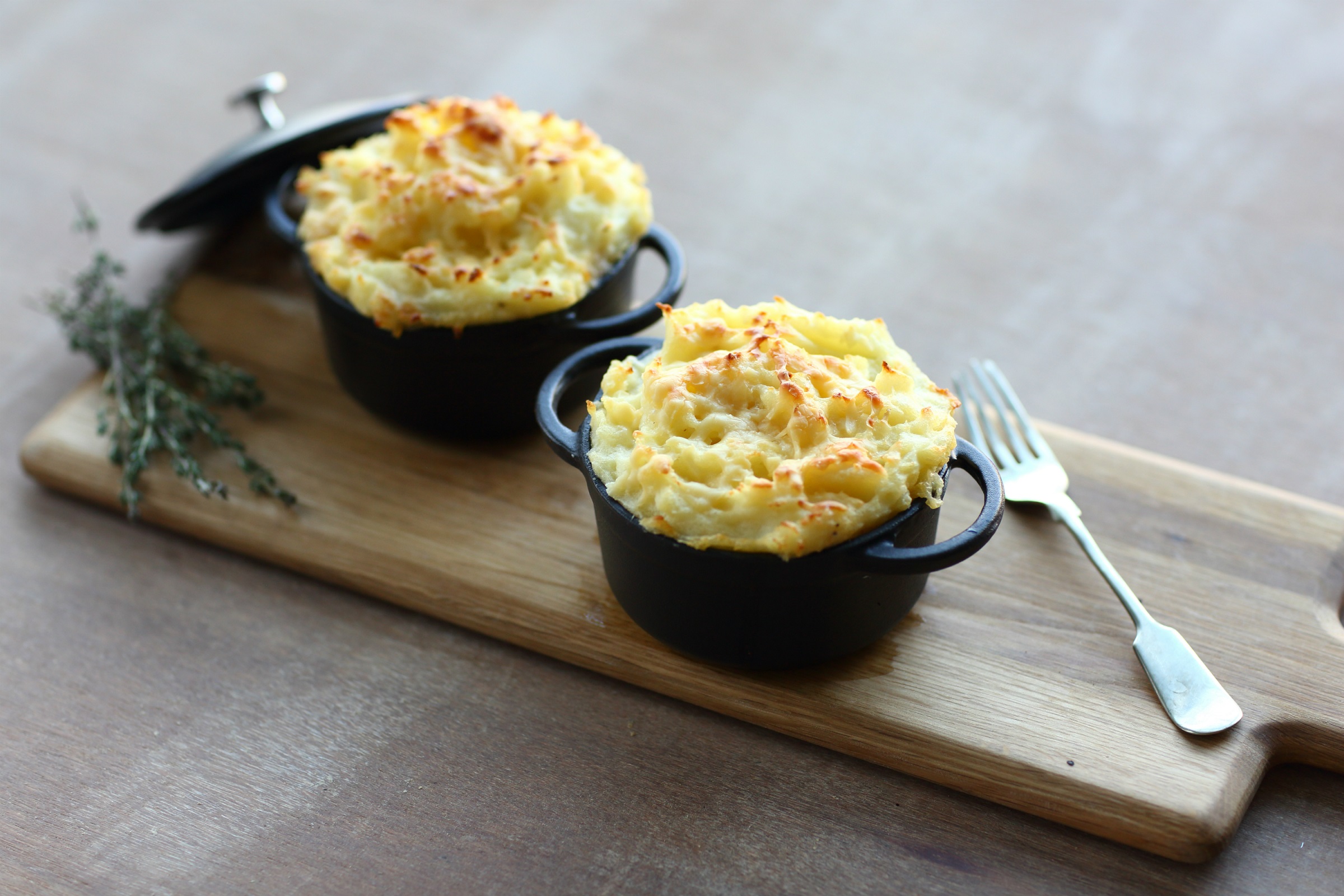
    Serving in a Cast Iron 10cm Mini Casserole is a great way to make individual pot pies that are not only sure to impress at a dinner party but provide a more generous portion than you might think.

    2 Toasting Nuts and Spices

    Proware Balsamic Pear Salad

    This helps release the aromatic compounds in nuts and spices, intensifying their flavour which can really improve things like curries and salads. We recommend using a Copper Tri-Ply 12cm Mini Frying Pan thanks to its compact size.

    3 Butter, Brandy and Basting

    In a professional kitchen the Copper Tri-Ply 9cm Mini Pan would likely be referred to as a butter pan and would be used extensively in the making of sauces and sweets. This functionality carries through to home kitchens too! Warming brandy for the Christmas pud, basting meats when barbecuing or infusing oils for bread, pasta and salads.

    4 Serving Dips and Sauces

    ProWare Dips

    Our Mini Casseroles are a great size for the table. The thermal retention of cast iron also means it can keep its contents warm (or cold, just pop in the freeze for 20 mins before serving) for a long time. Find some great dip recipes here.

    5 Frying an Egg

    Breakfast for one? A Copper Tri-Ply 12cm Mini Frying Pan is the perfect diameter for a single fried egg.

    6 Cooking for Kids

    If you’re warming baby food or cooking a small portion of veg, the Copper Tri-Ply 9cm Mini Pan comes in very handy.

    7 Serving Veg

    Whether you’re planning a romantic meal for two or a dinner party for ten, our copper and cast iron minis make for beautiful tableware to make your food feel that bit more special.


    Tip: Small pans can be unstable on some hobs. If this is the case with yours we would recommend a hob reducer to ensure your pan is properly supported.

  4. Time For a Dip – 3 Summer Recipes

    Comments Off on Time For a Dip – 3 Summer Recipes

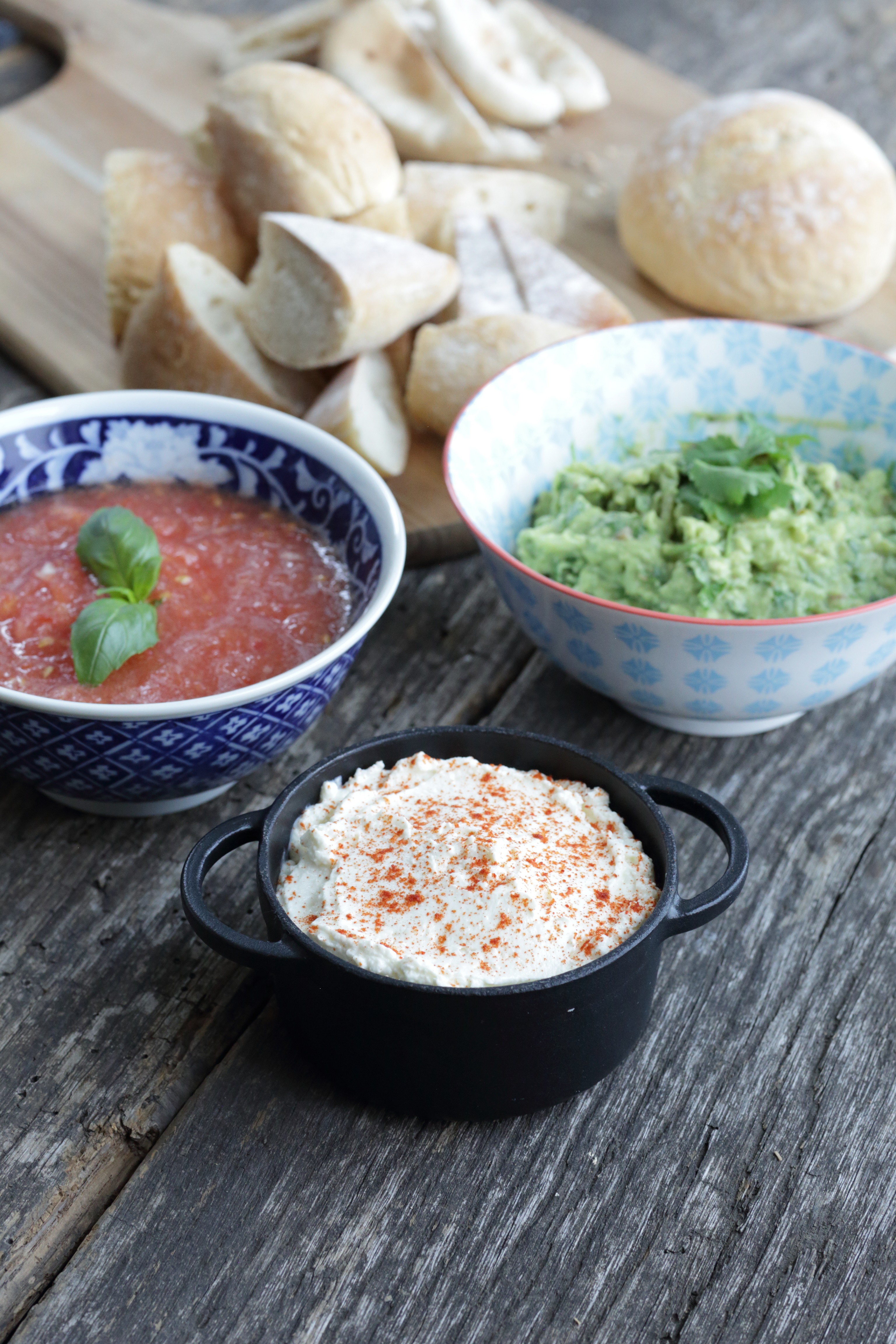
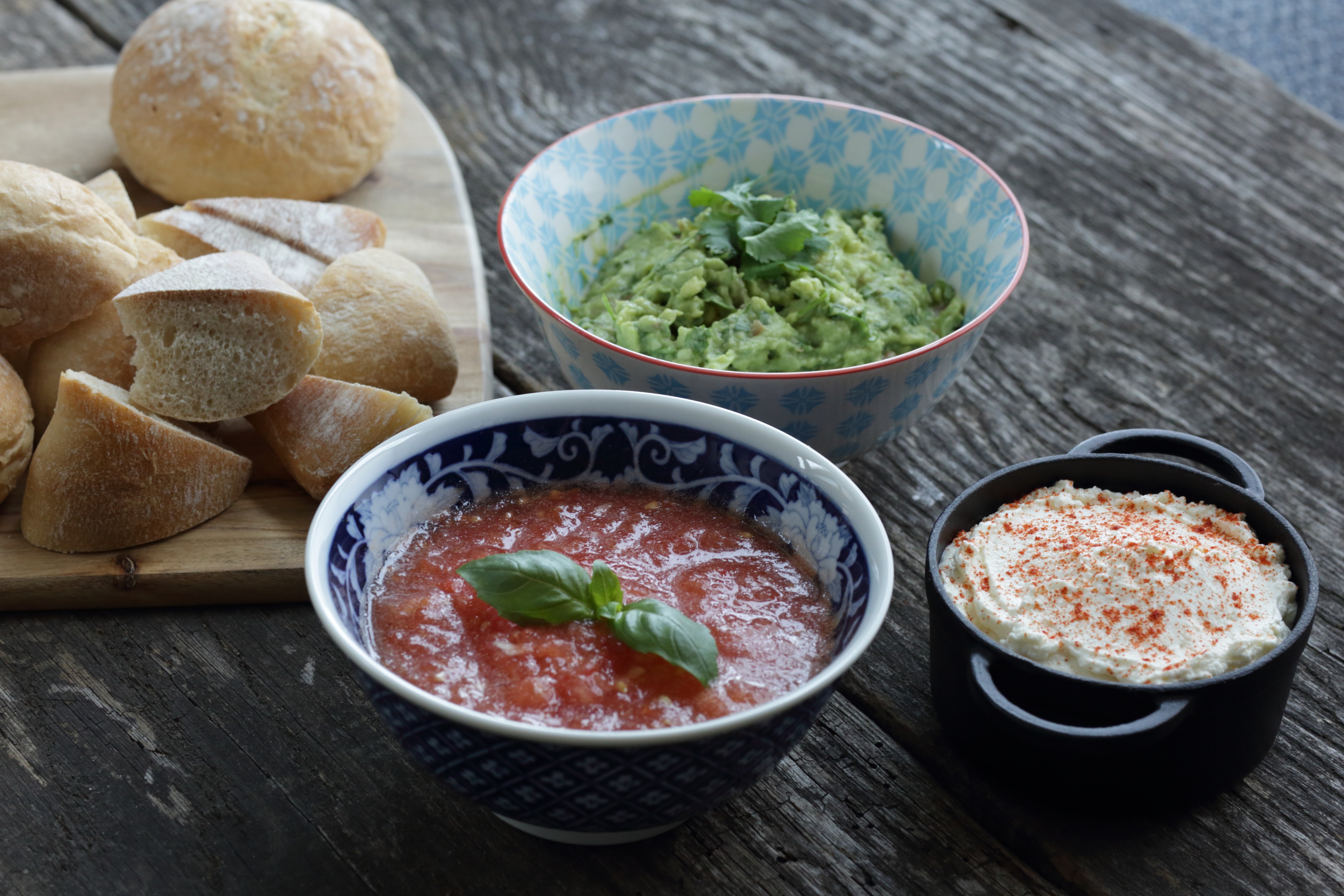
    Summer is finally on it’s way and we all champing at the bit to dust off the barbecue, wait for a gap in the clouds and enjoy some al-fresco dining. Dips are the ideal summer food; cool, quick and easy. They are especially great for entertaining, often requiring little to no cooking and can be ready to serve in minutes with some crusty bread, vegetables or tortilla chips. Likewise, they can be made in advance and kept in the fridge until needed.

    We have some great recipes for you to try. All of these will work perfectly for an impromptu barbecue, a party or just a Friday night in with a bottle of wine. All of these dips are suitable for vegetarians and don’t require a food processor!

    Whipped Feta Dip

    This is a great way to incorporate the fresh tang of feta in to all sorts of things. Try it in a sandwich with some avocado and sliced cucumber. Remember, a little goes a long way as it’s quite rich.

    Serves: 4

    Prep time: 5 minutes

    Cooking time: No cooking required


    Ingredients

    • 250g feta cheese
    • 85g full fat cream cheese
    • Paprika or sumac to serve

    Equipment


    Method

    1. Add cream cheese to mixing bowl and whisk until smooth.
    2. Finely chop feta and add to cream cheese. Whisk thoroughly until smooth. If a little stiff, loosen with a drizzle of olive oil.
    3. Add a sprinkle of paprika or sumac then serve with bread or veggies to dip.

    *Alternatively, using a food processor, pulse feta to fine crumbs. Add cream cheese and and pulse until well combined.


    Pan con Tomate

    A traditional tapas dish, this tomato dip is light, fresh and very easy to make with essentially two ingredients. It is also a popular breakfast dish spread liberally on toast. Make sure your tomatoes are good quality and ripe as they are the star of the show.

    Serves: 6

    Prep time: 5 -10 minutes

    Cooking time: No cooking required


    Ingredients

    • 2 large, ripe beefsteak tomatoes
    • 1 cloves of garlic, minced
    • 2tsp extra virgin olive oil
    • 1 good pinch of sea salt
    • Sprig of fresh basil to garnish (optional)

    Equipment

    • Box grater
    • Bowl

    Method

    1. Chop tomatoes in half and grate coarsely on cut face. The flesh should grate leaving the skin behind in your hand.
    2. Add minced garlic, oil and salt and mix.
    3. Serve with toasted ciabatta or warm flat breads.


    Classic Chunky Guacamole

    This is much nicer than the ones you buy in the shops and is so simple. You can use a food processor for this but do it by hand if you prefer a chunkier texture.

    Serves: 4

    Prep time: 5 minutes

    Cooking time: No cooking required


    Ingredients

    • 2 large, ripe avocados
    • 1 small onion
    • a handful of fresh coriander
    • 1 clove garlic
    • 5 ripe cherry tomatoes
    • 1 red or green chilli
    • juice of 1 lime
    • 1 good pinch of salt

    Equipment

    • Mixing bowl
    • Fork
    • Sharp knife

    Method

    1. Remove stones from avocado and scoop out flesh in to a bowl. Mash with the back of a fork; add lime juice and mix, this will stop the avocado going brown.
    2. Add the onion, very finely diced. Chop garlic, chilli, tomatoes and coriander very finely and add.
    3. Combine everything in a bowl and chill covered until serving. Serve with warm tortilla chips.

    Take a Dip - 3 Summer Recipes 2

  5. Growing Your Own – Why Everyone Should Try It

    Comments Off on Growing Your Own – Why Everyone Should Try It

    Accessing fresh fruit and vegetables has never been easier; by popping out to your local supermarket, you can buy almost everything the year round. We are no longer required to move with the seasons and to select ingredients according to the time of year.

    A consequence of this highly consistent availability is a huge increase in food mileage – the distance your food travels from field to shelf. In a society becoming increasingly aware of its carbon footprint, it makes sense to try and reduce our reliance on imported produce and to utilise the space we have in our own gardens.

    Why do it?

    The aim is not to start a farm, live off the land and become fully self sufficient. Even if we can reduce the amount of produce being imported, just slightly, it would be start in decreasing the amount of fossil fuels used in the transport of food. This especially applies over the summer months when most of what we buy in the supermarkets can be grown here without specialist equipment. In addition to this, there are plenty of reasons to start home growing, aside from the environmental factors.

    There are few pleasures that can be likened to the sense of achievement one feels when you have grown a tangible, edible thing from a seed the size of a grain of sand. The hours spent planting, watering, pruning and weeding can also prove highly therapeutic. The time provides a chance to get out in the fresh air, away from computer screens and beeping gadgets, to de-stress and re-calibrate your mind. This is before you consider the money you can save and quality of the food you can produce as a result of your efforts.

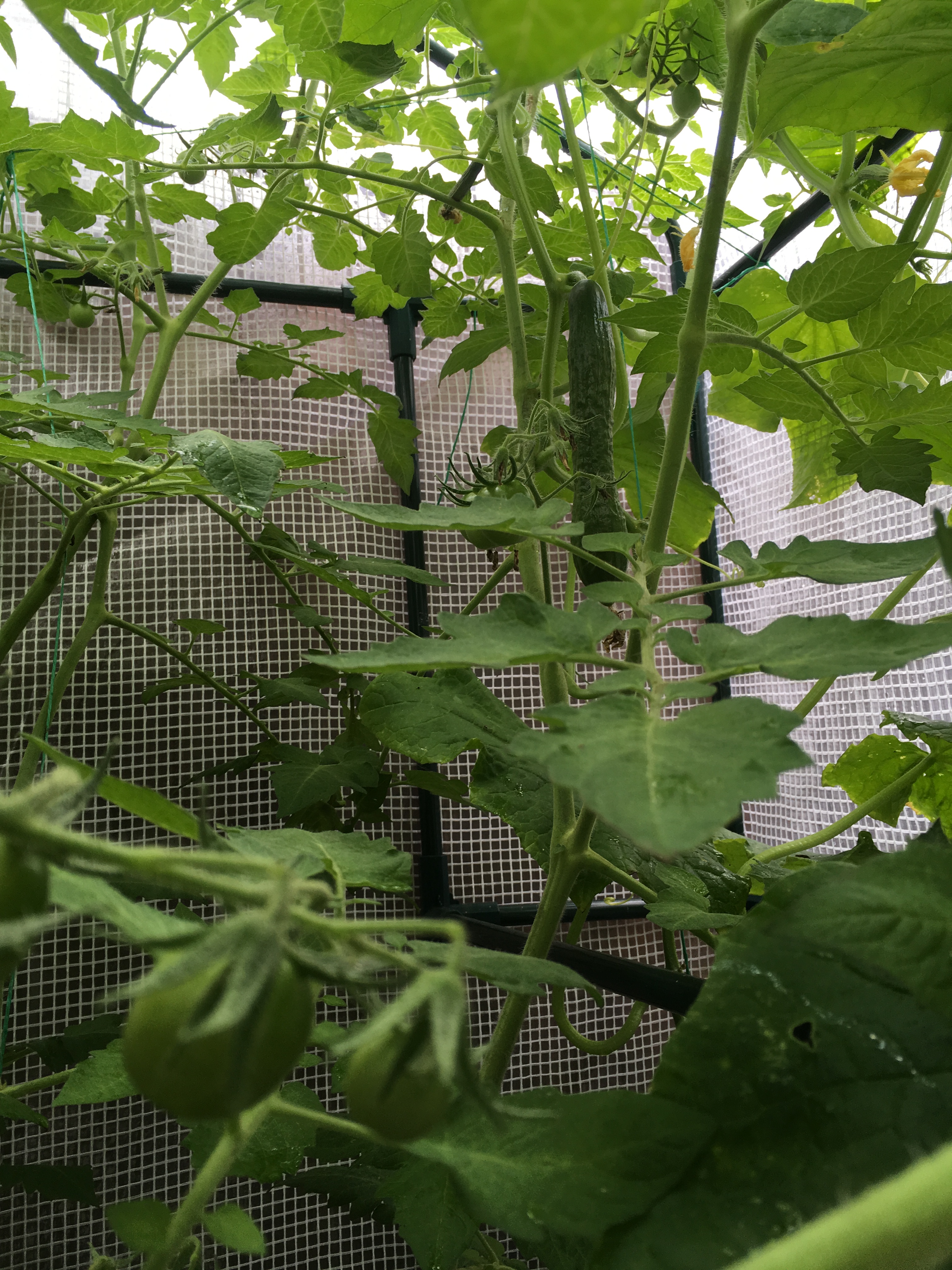
    Growing Your Own Cucumber

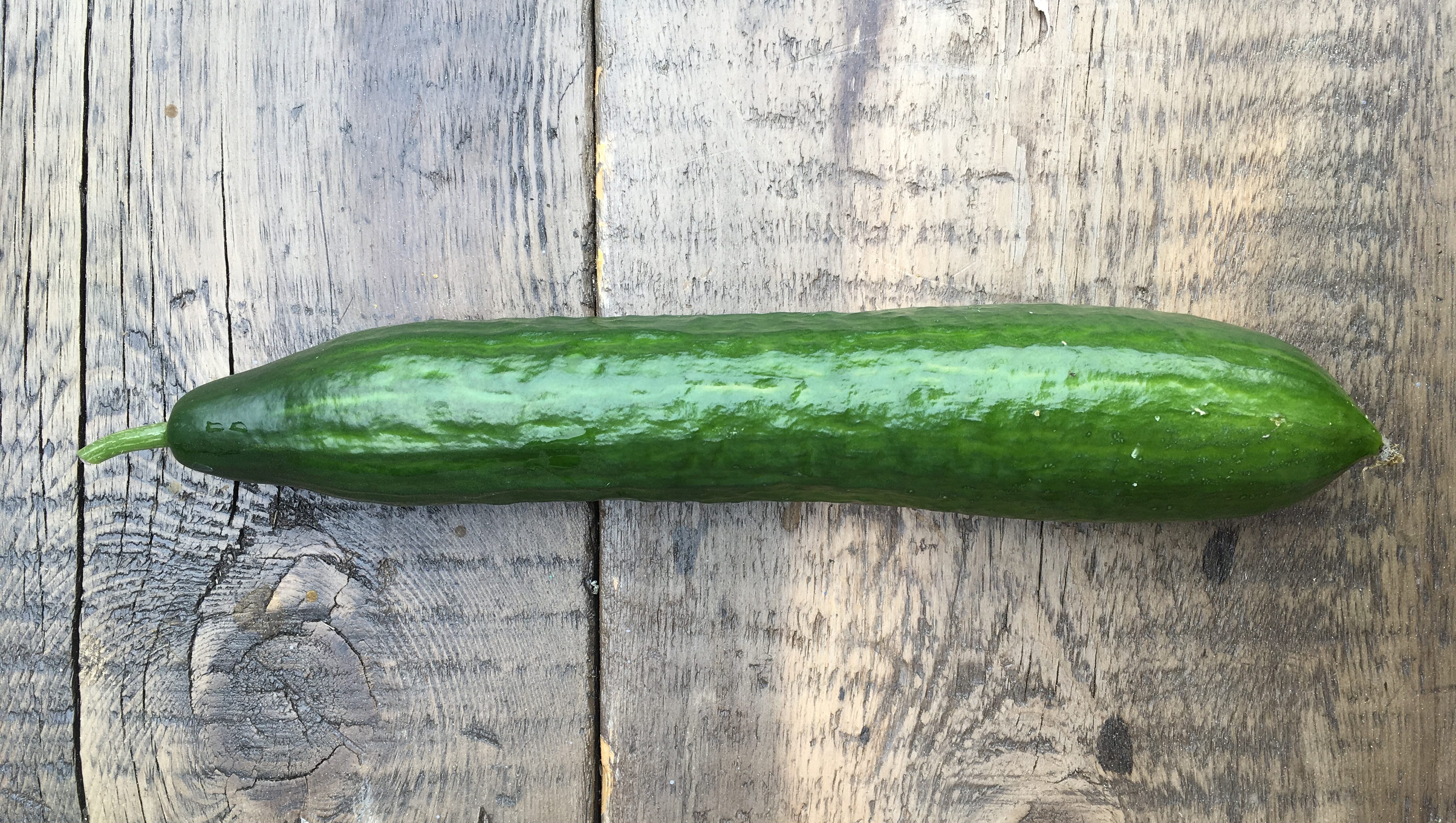
    First cucumber of the 2017 season (variety Telepathy).

    Some varieties can produce high yields with very little input (courgettes being the classic example). If properly positioned, fed and watered you can also expect a great return from tomatoes, chillies, cucumbers and peppers. Perhaps the easiest things to grow in our climate are potatoes. You can plant them in the ground (be careful as they can easily spread) or just about any deep container, build up the soil around the growing stems and leave them be. They will thrive in our climate and can be planted from late winter and harvested right through to mid autumn. Find out more about growing potatoes here.

    Anyone Can Do It

    It is a common misconception that you need a huge garden and a greenhouse to grow your own fruit and veg. It’s true that these things certainly won’t hurt but they are by no means essential. Whether you have a 50-acre estate or a sunny windowsill at your disposal there is nothing stopping you from getting stuck in.

    If you are low on space, growing things in containers is a great place to start with many fruits and vegetables growing perfectly well in pots or grow-bags (more info here). You can also buy small portable greenhouses for things like tomatoes and cucumbers that benefit from warmer temperatures than we can typically expect in the UK.

    Even with no outside space at all you can grow the likes of salad greens, herbs and chillies on a windowsill. There are a huge number of products available for you to create a kitchen garden actually inside your kitchen, some of which remove the need for sunshine (find out more here).

    Growing Your Own2

    Now is the Time to Get Started

    March is typically considered the start of the growing season and is a perfect time to get cracking. It is still a bit cold to plant some things outside but you can start sowing indoors. Once seeds germinate you can think about transferring seedlings outside when temperatures increase in late April or May. You will find specific instructions on when and where to sow on the back of seed packets.

    What are you waiting for?

    Get In Touch

    If you grow your own, we would love to hear from you. Email or tweet us and let us know what you love about it, if you have any tips and tricks, or if you just want to share some photos of your produce.

  6. Cooking with Copper: A Brief History

    Comments Off on Cooking with Copper: A Brief History

    It is no secret that copper is currently experiencing a huge upsurge in popularity. This is mainly thanks to its beautiful colour featuring heavily in the ranges of countless homeware retailers. There is, however, far more to this lustrous metal than just its appearance.

    For example, it has a greater level of thermal conductivity than any other metal (except silver); roughly 60% higher than aluminium and 3000% higher than stainless steel. This means copper is capable of heating up very quickly when compared to other metals.

    Perhaps a less commonly known property of copper is it being inherently antimicrobial. A wide range of harmful microbes are unable to survive for more than a couple of hours when in contact with a surface made of copper or one of its alloys (brass and bronze). This has led to it often being used for frequently touched surfaces such as door knobs, push plates and taps.

    A seemingly perfect material for cooking, it is therefore no surprise that it has been used in kitchens for millennia. But exactly when did we learn to utilise copper and its valuable assets?

    Origins

    It is hard to pin down an exact date when copper cookware was first introduced. Pieces discovered in regions of the middle east were dated as far back as 9000BC, suggesting cooking with copper began during the Neolithic period (≈10000-2000BC). As civilisations became increasingly capable in metallurgical techniques, metals such as copper became more widely used. It would have been around this time that copper replaced stone as the material used for making tools and cooking vessels.

    The use of copper is also well documented in Ancient Egypt. Not only was it used to produce water and oil containers, but it was also used to in medical practices. The antimicrobial nature of copper was exploited long before the concept of microorganisms was fully understood. The Smith Papyrus, a medical text written between 2600 and 2200BC records the use of copper in sterilising wounds and drinking water.

    Tin Lining

    Although copper is essential to many processes within the human body, it can become toxic if consumed in excess. It was this knowledge that gave rise to lining cookware with tin, a technique used for hundreds of years to prevent copper leaching in to food.

    These tin linings would eventually wear out and during the 18th and 19th century, it was common for people to send pans away to be re-tinned. This practice is becoming increasingly rare, as are the craftsmen who perform it. Despite this, there are still manufactures producing tin-lined copper cookware who also offer a re-lining service. Perhaps the best known of these is Mauviel, a French manufacturer who have been making this type of cookware since 1830.

    Tin has now largely been replaced by stainless steel as an interior cooking surface. Not only is it more cost effective, but the high grade of stainless steel used in premium cookware (typically 18/10) is highly resistant to corrosion and more durable than tin.

    Copper Base

    Another way in which the virtues of copper have been combined with those of stainless steel is in copper base cookware. A base plate made from a layer copper and aluminium is fused to a stainless steel body. This is done using a process called impact bonding using 600 tonnes of pressure.

    The high conductivity of copper means the base of the pan will heat much more evenly, reducing the formation of hot spots. Modern 3 ply copper cookware effectively extends this base construction up the sides of the pan also.

    Tri-Ply

    As manufacturing processes advanced it became possible to combine different materials to produce cookware made up of three distinct layers, each possessing their own unique properties. These are as follows;

    1st Layer – Copper

    Very high thermal conductivity allows the entire outer surface to heat rapidly and evenly.

    2nd Layer – Aluminium

    Provides a lightweight core with excellent thermal retention.

    3rd Layer – Stainless Steel

    An inert and highly durable cooking surface.


    Copper Tri-Ply Construction

    It is this type of construction that is used by ProWare to produce our Copper Tri-Ply cookware. You can find out more about how these pans are made here.

  7. 7 Things We Love About Our Stainless Steel Tri-Ply

    Comments Off on 7 Things We Love About Our Stainless Steel Tri-Ply

    Last December we were delighted to launch our Stainless Steel Tri-Ply range. We have now had a couple of months to live with them and see how the pans perform in the real world. The team here at ProWare have had a discussion about what they like most about them and this is what we came up with, we hope you agree!

    Efficiency

    ProWare Stainless Steel Tri-Ply Hob

    A totally flat base ensures excellent hob contact

    These pans are designed with a perfectly flat base to ensure maximum contact with flat hobs and reduce ambient heat loss. This means they are very responsive to changes in heat, quickly achieving a rolling boil or settling down to a simmer. The Tri-Ply construction allows them to perform at their best on all hob tops (find out more here).

    2 Versatility

    ProWare Stainless Steel Tri-Ply Frying Pans Non-Stick

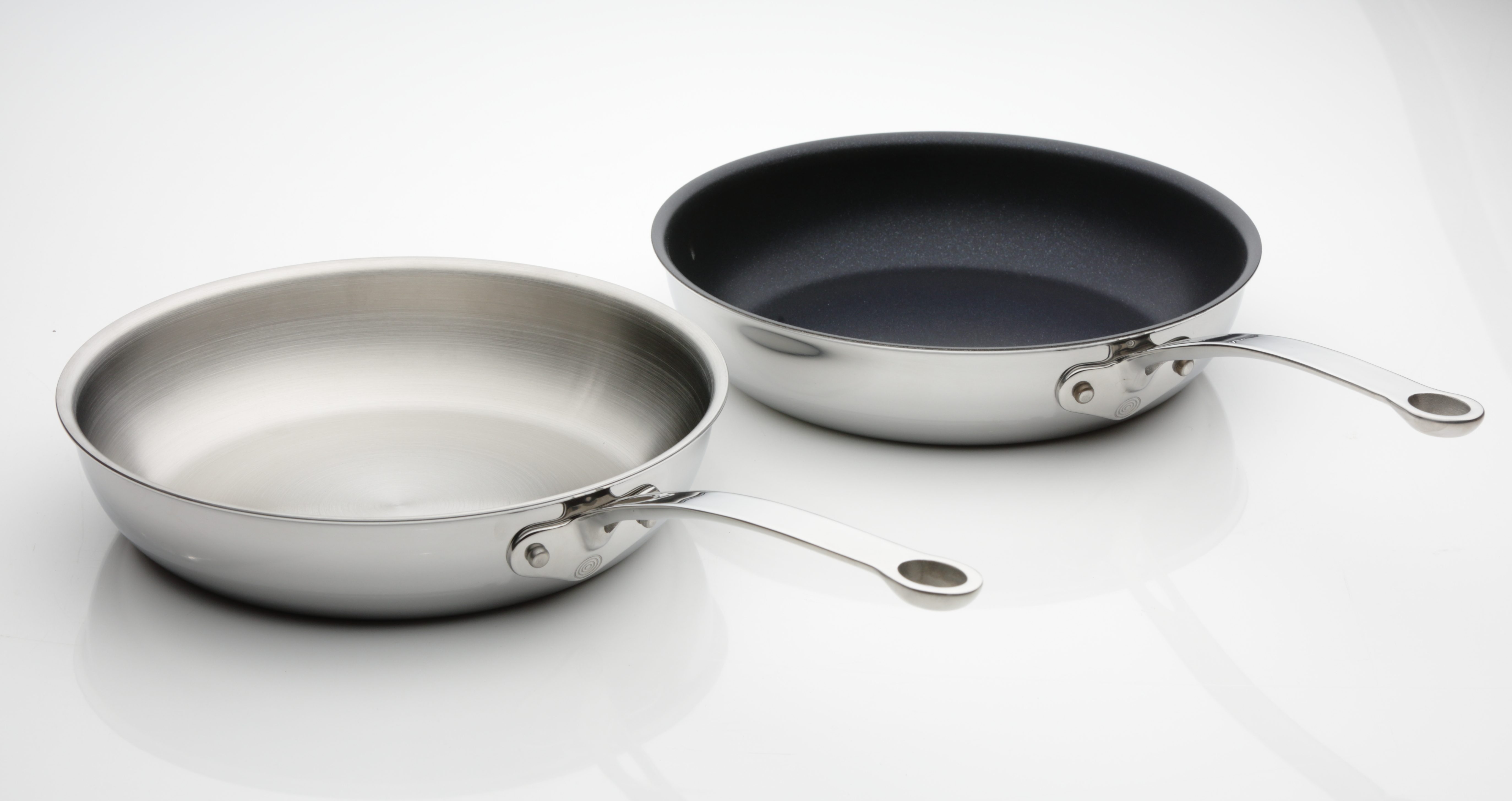
    ProWare Stainless Steel Tri-Ply 24cm with and without non-stick

    When developing the Stainless Steel Tri-Ply 14cm Milk Pan and 24cm Frying Pan, we decided to offer the choice of non-stick or not (read more about the benefits of each here). Each has its pros and cons. Consequently, each perform some tasks better than others. If you’re going to use you frying pan for fried eggs and crepes, go for non-stick. Conversely, if you intend to make lots of sauces using a metal whisk, a 14cm saucepan without non-stick would be preferable. Another bonus is that the entire range is oven safe!

    3 Durability

    Stainless Steel Tri-Ply Durability

    Our stainless steel rivets are secured with 200 tonnes of pressure

    When we develop a new product, the approach we take when deciding on a specification level is to ask ourselves ‘what would we want in our own kitchen?’ With a wall thickness of 2.5mm and cast stainless steel handles, these pans both look and feel extremely robust. In addition, our handles are secured using stainless steel rivets pressed with 200 tonnes of pressure. Most manufacturers use more cost effective aluminium rivets however, these are softer than stainless steel and can deform if repeatedly banged causing handles to loosen. We offer a lifetime guarantee on every element of the cookware with the exception of the non-stick coating.

    4 Aesthetics

    ProWare Stainless Steel Tri-Ply Hanging

    Hanging loops mean these pans don’t have to be confined to the cupboard

    We have established that there is more to these pans than just a pretty base (get it?…anyone?), but we couldn’t talk about our Stainless Steel Tri-Ply without acknowledging just what handsome devils they are. Classic yet contemporary design combined with the non-tarnishing properties of stainless steel means these pans will come out of the dishwasher looking almost as good as the day you bought them for years to come.

    5 Thoughtful Design

    SSTP Nested 2

    ProWare Stainless Steel Tri-Ply saucepans efficiently nest

    We have incorporated several design aspects in to these pans to make them not only beautiful but dynamically functional. A steep arch in the handle makes the items easier to handle; it keeps the handle away from the heat source; and, allows the pans to nest efficiently in cupboards or drawers. An eyelet where the handle meets the pan body disperses heat to ensure handles don’t get too hot and a hanging loop enables the pans to be elegantly displayed in your kitchen. We also know that larger pans can be very heavy when full. That’s why we have added helper handles to the 18cm and 20cm saucepans, and the 24cm sauté pan.

    6 Induction Compatible

    ProWare Stainless Steel Tri-Ply Induction

    Cooking on induction is now possible with ProWare

    This is the first complete range we have produced that can be used on an induction hob. The popularity of induction is increasing rapidly due to its wide appeal as a clean, efficient method of cooking.

    7 Roast to Perfection

    ProWare Stainless Steel Tri-Ply Roasting Pan

    ProWare Stainless Steel Tri-Ply Roasting Pan

    In February 2018 we launched something entirely new for us. The latest member of the Stainless Steel Tri-Ply family, our 35cm Roasting Pan has the same three-layer construction as the rest of the range meaning it will work on an induction hob too. This stunning piece makes oven-to-table dishes that much more appealing and it is built to last so will see you through decades of roast potatoes!

    We would love to hear from you!

    If you think we have missed anything or have any feedback about our Stainless Steel Tri-Ply (or any of our other products), please get in touch.

  8. Non-Stick vs. Stainless Steel – The Test

    Comments Off on Non-Stick vs. Stainless Steel – The Test


    The Test

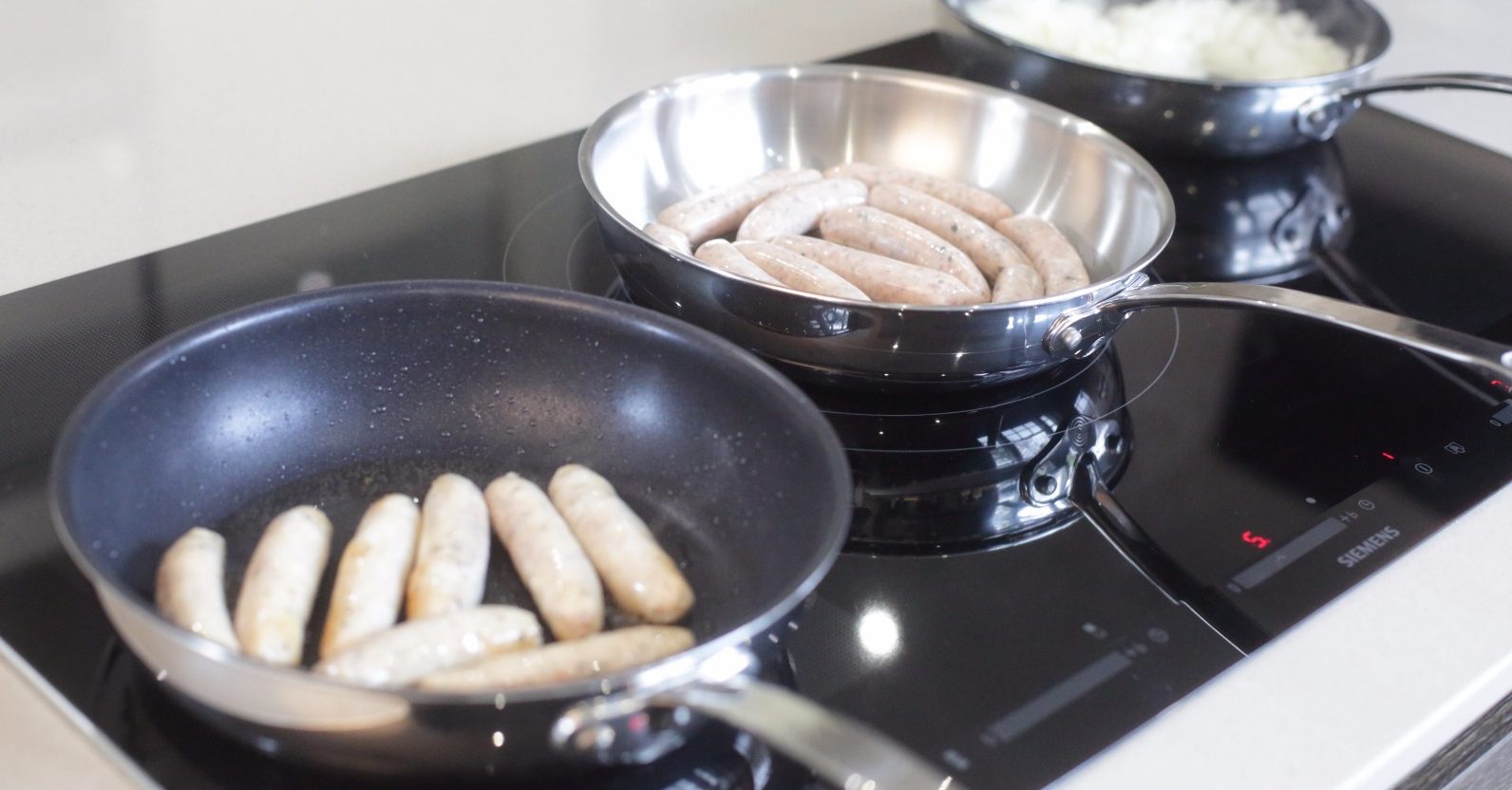
    To compare the results achieved from stainless steel alongside non-stick we have devised simple experiment. Heck sausages are a favourite among ProWare staff. Not only are they a lunchtime saviour for us at The GoodFood Show, their range of meat and vegetarian sausages truly has something for everyone. In recent times, they have also ventured out in burgers, veggie balls and even sauerkraut.

    It is with great pride that I can announce that Heck’s Chicken Italia sausages will serve as yardstick in this highly scientific endevour!

    The sausages were cooked as follows;

    Proware Stainless Steel Tri-Ply 28cm Non-Stick Frying Pan
    Hob – 30 minutes, medium/low heat

    ProWare Stainless Steel 28cm Frying Pan
    Hob – 5 minutes, medium/high heat
    Oven – 25 minutes at 180°C

    NB – Both of our Stainless Steel Tri-Ply frying pans are oven safe, however, the non-stick pan is only safe up to 200C, we therefore decided to exploit the advantage of the former for the purpose of this test and used the non-stick pan on the hob only.

    Proware Stainless Steel Tri-Ply Frying Pan Oven

    The Results

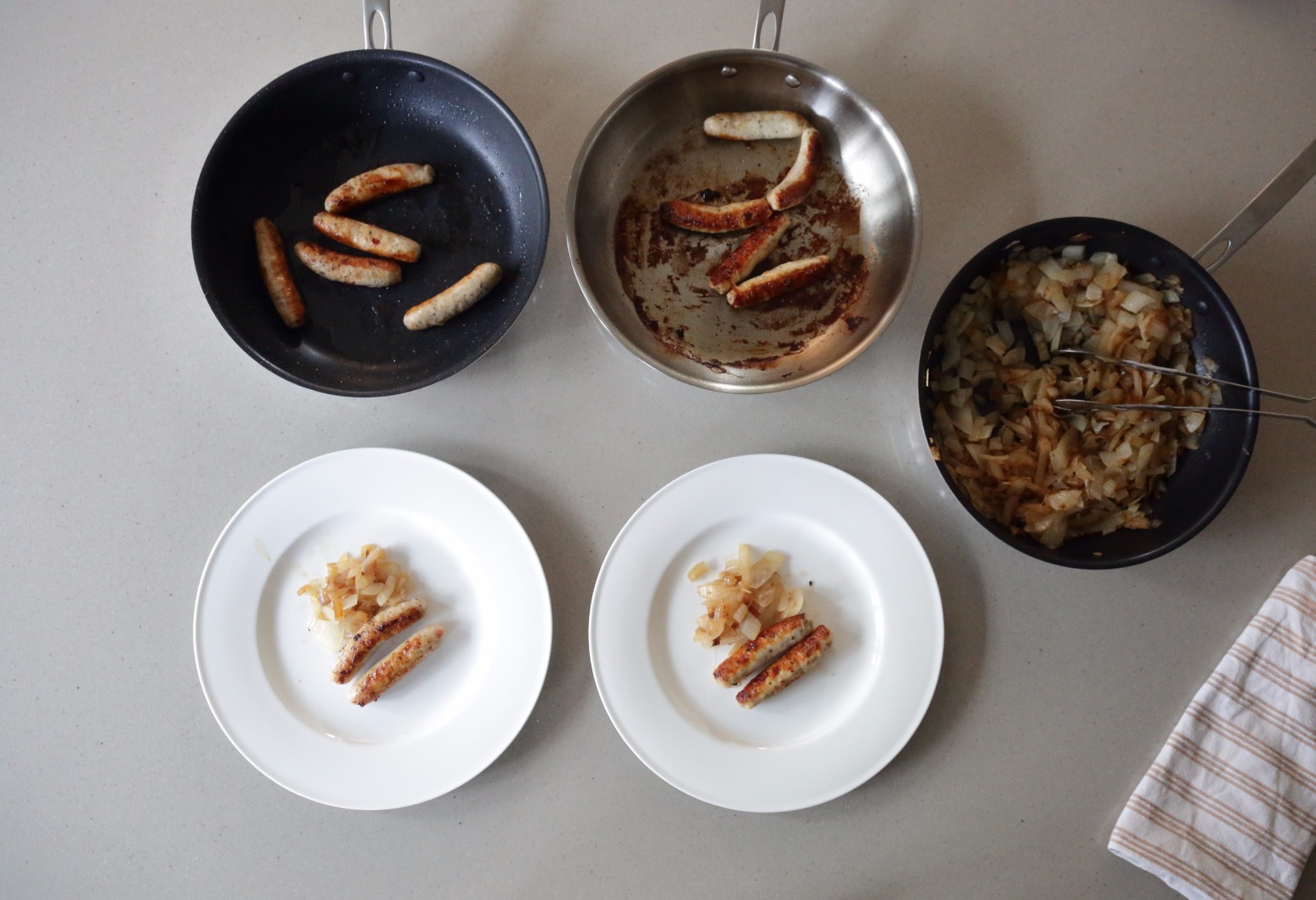
    The end results did show a difference between the two pans but in all fairness it was perhaps not as obvious as we had anticipated. The sausages in the stainless steel pan certainly did brown better which gave them a better caramelised flavour; and should you be making bangers and mash, you could have made a stonking onion gravy with the sticky juices left in pan. It would also be within the realms of possibility to add some Yorkshire pudding batter, sling it in the oven and make a toad in the hole.

    In the face of this, the non-stick pan performed admirably and held its own. Whereas the final result may not have been quite as good, for those wanting a speedy clean up and to use less oil, this would be the pan to choose.

    ProWare Stainless Steel Tri-Ply Frying Pans Results

  9. Non-Stick vs. Stainless Steel – Which is Better?

    Comments Off on Non-Stick vs. Stainless Steel – Which is Better?

    It has been over 60 years since non-stick cookware was first introduced, and since then its popularity has continued to be widespread and significant. You would likely be hard-pressed to find a household in the UK that doesn’t have at least one non-stick pan. The promise of pancakes gliding effortlessly on to your plate; the prospect of never again being stood at the kitchen sink chiselling burnt food off your favourite frying pan. The appeal was, and still is, obvious. There are some strong arguments, however, in favour of the more traditional stainless steel pans that beg the question – which is better, non-stick or not?

    Whatever your feelings are toward non-stick pans, it is difficult to deny their virtues in the realm of frying eggs and making pancakes. The ease with which you can produce perfect fried eggs with nothing but a drop of oil and a delicate touch make them (in our view) worth having, if just for this task alone. Also, cleaning non-stick pans is often a breeze. If you get a decent one sometimes just a wipe with a paper towel does the trick.

    ProWare Stainless Steel Tri-Ply 26cm Non-Stick Frying Pan

    ProWare Stainless Steel Tri-Ply 24cm Non-Stick Frying Pan

    Unfortunately, they do have their limitations. The main one, which every keen cook will race to share, is that when using a non-stick pan, you cannot achieve that lovely golden colour when searing meat or caramelising. For this purpose, stainless steel pans are invaluable. Another area in which stainless steel reigns supreme is the making of gravy and pan sauces, an essential part of some dishes. All the juices that are released during cooking stick to the pan, allowing you to deglaze with the desired liquid.

    ProWare Stainless Steel Tri-Ply 26cm Frying Pan

    ProWare Stainless Steel Tri-Ply 24cm Frying Pan

    Aside from culinary matters, there are also some very practical reasons why stainless steel pans are favourable. Firstly, they are generally considered to be far more durable than their non-stick counterparts due to non-stick coatings often being easily damaged and requiring careful handling (find out more about looking after your non-stick here). To ensure the longevity of our pans we use Teflon Platinum Plus, a market leading, ceramic reinforced coating that we test rigorously (check out the video here). In addition, non-stick pans can’t be preheated in the way a stainless steel one can. This is due to good non-sticks being made up of multiple layers and when a pan is heated while empty the heat has nowhere to be transferred to which can lead to the layers deteriorating.

    Many people are deterred from cooking with stainless steel because they think everything will immediately stick, burn and it will all end in a charred, greasy disaster. What they don’t know is that it will only take a bit of confidence, some practice and the right pan for it to become a walk in the park.

    A great place to start is buying a quality pan. Pans that are very thin (some basic ones are as thin as 0.4mm), are likely to develop hot-spots and will not heat evenly. It is this which leads to food being burnt in one place and underdone in another. Our ProWare 24cm Stainless Steel Frying Pan has a three-layer construction – two layers of stainless steel sandwiching a core of aluminium. The overall thickness of the pan is 3mm, resulting in a wonderful robust feel and an ability to heat very evenly. It also means, like the rest of the range, this pan is oven safe.

    Once you have your pan, the easiest way to ensure effortless, stick free cooking is to season the pan (it is worth noting that this is not essential if you are willing to use oil a bit more liberally). Seasoning will produce a thin layer on the surface of the pan which will allow you to cook without the addition of more oil, and most importantly, without your food sticking. This is how you do it:

    Seasoning Stainless Steel

    1. Ensure your pan is thoroughly clean and over a medium heat, allow the pan to heat up for 2-3 minutes.
    2. Add a tablespoon of oil (rapeseed works very well) and swirl around the pan to evenly coat the inside.
    3. Heat the oil until it begins to smoke. Once smoking, remove the pan from the heat and set aside to cool completely.
    4. Pour out the oil and wipe the inside of the pan with paper towel.
    5. Your pan is now seasoned and ready to use.

    Another useful tip when it comes to cooking with stainless steel is take your time! Do not rush and resist the temptation to constantly move your food around the pan. For example, when cooking meat, if the pan is properly preheated and the oil is hot when the steak is added you need not move it again until it is time to turn it. The meat will seal beautifully and you will be able to lift it from the pan easily, if you try to move it too soon you run the risk of tearing the flesh.

    ProWare Copper Tri-Ply 24cm Frying Pan

    The Verdict

    A conclusion we can draw in the argument of stainless steel versus non-stick, is that they both have their merits and drawbacks but it really depends on what you intend to use it for. For the more ardent cooks amongst you, we would actually recommend having one of each. Use your non-stick for things like eggs, crepes and delicate fish; and the stainless steel for just about everything else.