Tag Archive: cooking

  1. Char Sui Pork – Chinese Barbecue Pork

    Comments Off on Char Sui Pork – Chinese Barbecue Pork

    This recipe is something of a favourite in our household, the mix of sweet, the savoury and richness of the pork is something that is very hard to beat. The pork fillets don’t hang about too long when they’re put on the table. It is much easier than you would imagine but it does take some forward planning to allow enough time for the marinade. The versatility of the pork once it is cooked is fantastic, you can serve it many different ways, plus if you’ve got any left overs you can throw them into a fried rice dish or serve on top of some soup noodle etc.

    It also feels like a good debut of our new stainless steel tri-ply roaster!

    Serves: 4

    Prep time: 10 minutes plus minimum 2-3 hours to marinate

    Cooking time: 40 minutes


    Ingredients

    • 1 tablespoon runny honey
    • 1 tablespoon dark brown sugar
    • 2 pieces of pork fillet approximately 500 grams
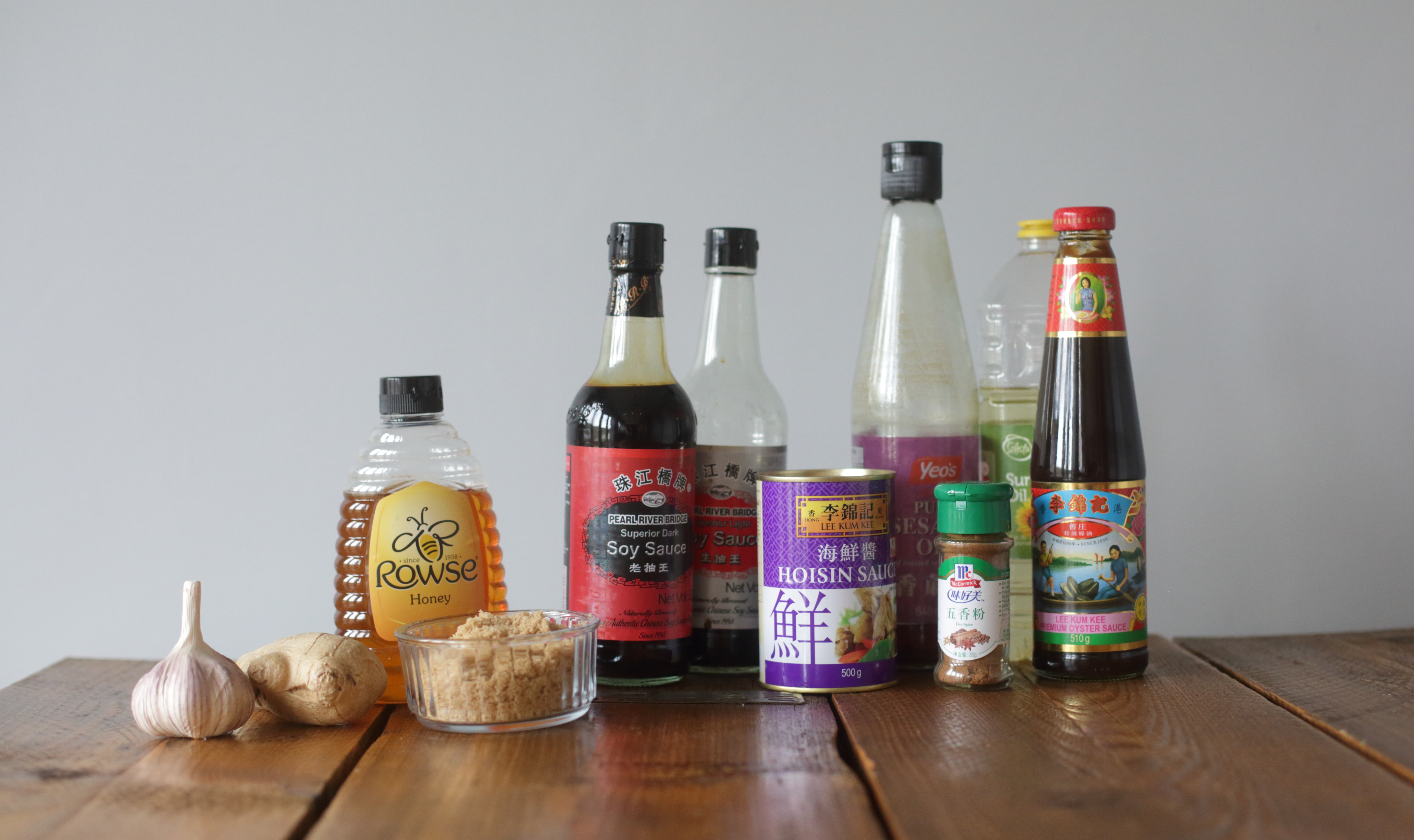
    ProWare Char Sui Pork Ingredients

    For the marinade

    • 2 tablespoons vegetable oil
    • 1 teaspoon sesame oil
    • 2 tablespoons light brown sugar
    • 3 tablespoons runny honey
    • 3 tablespoons hosin sauce
    • 1 tablespoon oyster sauce
    • 1 tablespoon light soy sauce
    • 1/2 tablespoon dark soy sauce
    • 1 teaspoon Chinese five spice powder
    • 2 cloves of garlic, finely chopped
    • 1 inch (2 cm) knob of ginger, peeled and finely chopped

    Equipment

    • Knife
    • Chopping board
    • Large ziplock bag or similar for marinating

    Cooking Method

    1. Measure all the ingredients for the marinade into a bowl and whisk to combine.
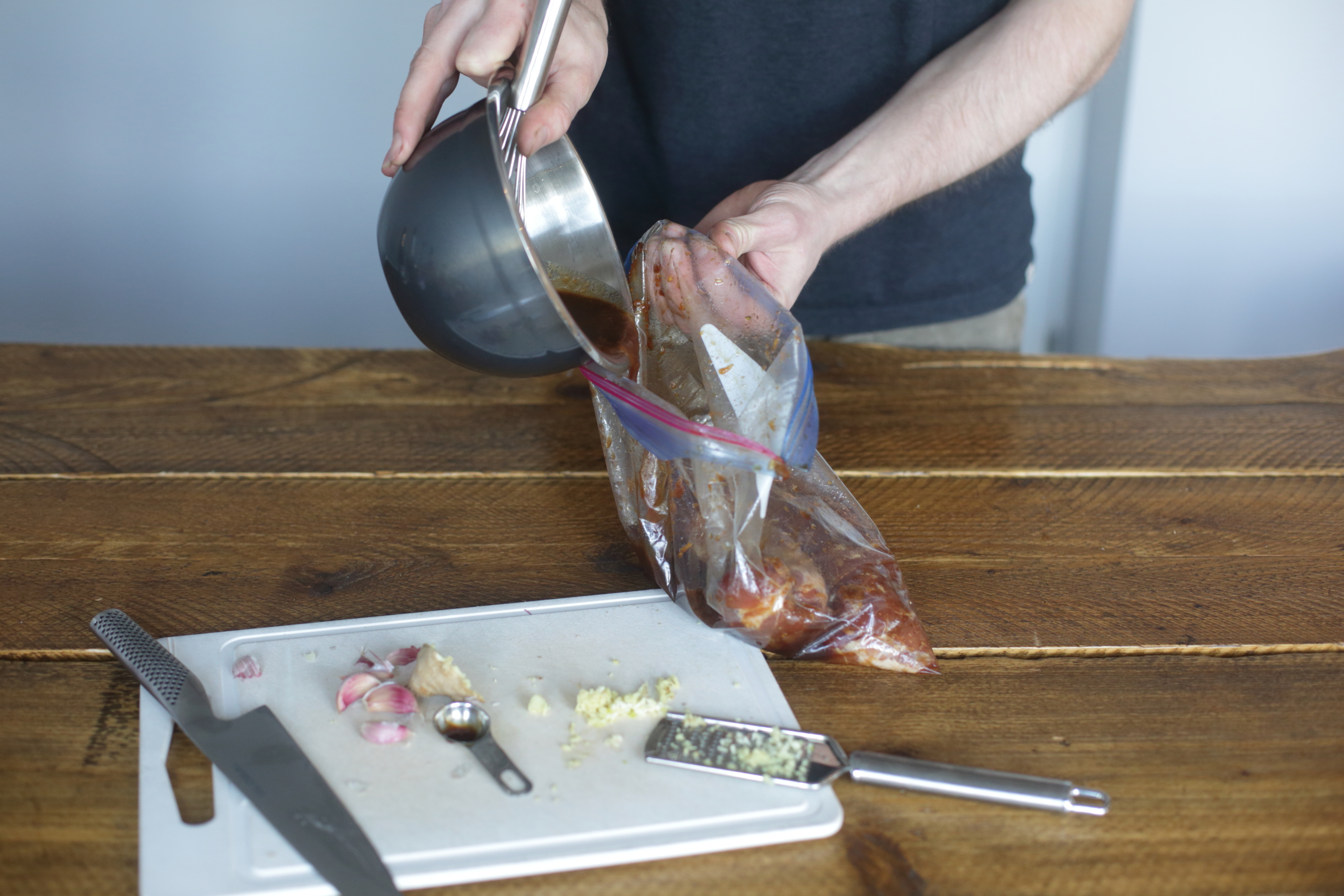
      ProWare Char Sui Pork Preparation 1

    2. Place the pork into a large ziplock bag or similar and pour in the marinade. Mix so the pork is coated and seal the bag. Place in the fridge to marinate for 2-3 hours or overnight.
    3. Bring the pork back to room temperature before you plan to roast it.
    4. Preheat the oven to 180°C/350°F
    5. Whilst the oven is preheating pour the marinade into a sauce pan and add the additional sugar and honey and bring to a simmer and reduce a little, this is for glazing the pork whilst in the oven.
    6. Place a sheet of foil, roughly double the length of the pork fillets, in the roasting tin. place the pork on top of the foil and fold the foil over loosely. Then place into the oven
    7. Place the pork in the oven for 25 minutes.

      ProWare Char Sui Pork Preparation 1

    8. Turn on the grill setting of the oven, and remove the foil, glaze the pork liberally with the reduction every couple of minutes. Whilst glazing keep an eye on the pork and do not let it crozzle too far.
    9. Remove the pork and leave to rest for at least 10 minutes on a chopping board, loosely covered in foil.

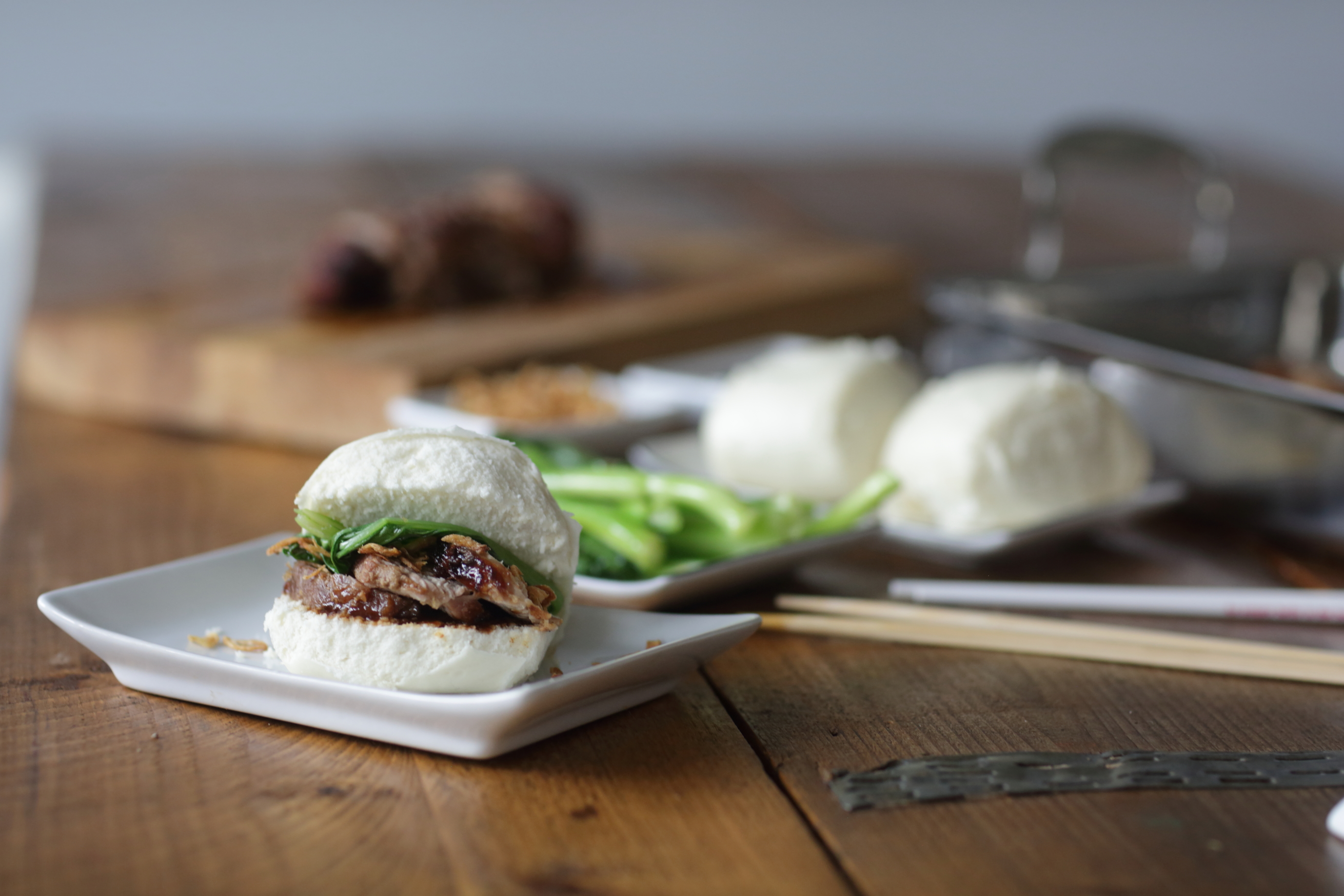
    We like to serve the pork sliced finely in some freshly steamed boa with hoisin, crisply fried shallots and garlic fried choy sum. Enjoy!
  2. 7 Things We Love About Our Stainless Steel Tri-Ply

    Comments Off on 7 Things We Love About Our Stainless Steel Tri-Ply

    Last December we were delighted to launch our Stainless Steel Tri-Ply range. We have now had a couple of months to live with them and see how the pans perform in the real world. The team here at ProWare have had a discussion about what they like most about them and this is what we came up with, we hope you agree!

    Efficiency

    ProWare Stainless Steel Tri-Ply Hob

    A totally flat base ensures excellent hob contact

    These pans are designed with a perfectly flat base to ensure maximum contact with flat hobs and reduce ambient heat loss. This means they are very responsive to changes in heat, quickly achieving a rolling boil or settling down to a simmer. The Tri-Ply construction allows them to perform at their best on all hob tops (find out more here).

    2 Versatility

    ProWare Stainless Steel Tri-Ply Frying Pans Non-Stick

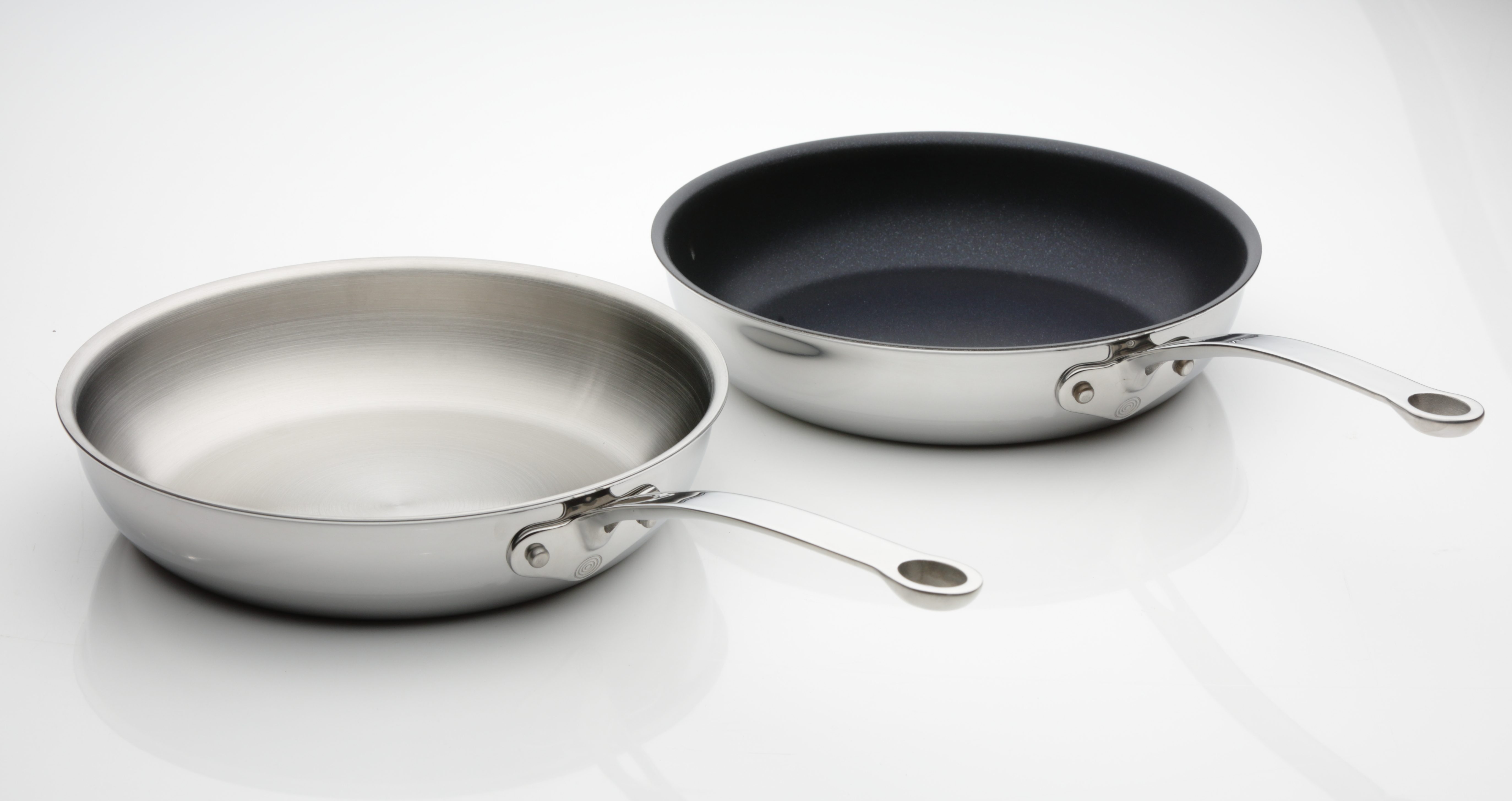
    ProWare Stainless Steel Tri-Ply 24cm with and without non-stick

    When developing the Stainless Steel Tri-Ply 14cm Milk Pan and 24cm Frying Pan, we decided to offer the choice of non-stick or not (read more about the benefits of each here). Each has its pros and cons. Consequently, each perform some tasks better than others. If you’re going to use you frying pan for fried eggs and crepes, go for non-stick. Conversely, if you intend to make lots of sauces using a metal whisk, a 14cm saucepan without non-stick would be preferable. Another bonus is that the entire range is oven safe!

    3 Durability

    Stainless Steel Tri-Ply Durability

    Our stainless steel rivets are secured with 200 tonnes of pressure

    When we develop a new product, the approach we take when deciding on a specification level is to ask ourselves ‘what would we want in our own kitchen?’ With a wall thickness of 2.5mm and cast stainless steel handles, these pans both look and feel extremely robust. In addition, our handles are secured using stainless steel rivets pressed with 200 tonnes of pressure. Most manufacturers use more cost effective aluminium rivets however, these are softer than stainless steel and can deform if repeatedly banged causing handles to loosen. We offer a lifetime guarantee on every element of the cookware with the exception of the non-stick coating.

    4 Aesthetics

    ProWare Stainless Steel Tri-Ply Hanging

    Hanging loops mean these pans don’t have to be confined to the cupboard

    We have established that there is more to these pans than just a pretty base (get it?…anyone?), but we couldn’t talk about our Stainless Steel Tri-Ply without acknowledging just what handsome devils they are. Classic yet contemporary design combined with the non-tarnishing properties of stainless steel means these pans will come out of the dishwasher looking almost as good as the day you bought them for years to come.

    5 Thoughtful Design

    SSTP Nested 2

    ProWare Stainless Steel Tri-Ply saucepans efficiently nest

    We have incorporated several design aspects in to these pans to make them not only beautiful but dynamically functional. A steep arch in the handle makes the items easier to handle; it keeps the handle away from the heat source; and, allows the pans to nest efficiently in cupboards or drawers. An eyelet where the handle meets the pan body disperses heat to ensure handles don’t get too hot and a hanging loop enables the pans to be elegantly displayed in your kitchen. We also know that larger pans can be very heavy when full. That’s why we have added helper handles to the 18cm and 20cm saucepans, and the 24cm sauté pan.

    6 Induction Compatible

    ProWare Stainless Steel Tri-Ply Induction

    Cooking on induction is now possible with ProWare

    This is the first complete range we have produced that can be used on an induction hob. The popularity of induction is increasing rapidly due to its wide appeal as a clean, efficient method of cooking.

    7 Roast to Perfection

    ProWare Stainless Steel Tri-Ply Roasting Pan

    ProWare Stainless Steel Tri-Ply Roasting Pan

    In February 2018 we launched something entirely new for us. The latest member of the Stainless Steel Tri-Ply family, our 35cm Roasting Pan has the same three-layer construction as the rest of the range meaning it will work on an induction hob too. This stunning piece makes oven-to-table dishes that much more appealing and it is built to last so will see you through decades of roast potatoes!

    We would love to hear from you!

    If you think we have missed anything or have any feedback about our Stainless Steel Tri-Ply (or any of our other products), please get in touch.

  3. Non-Stick vs. Stainless Steel – The Test

    Comments Off on Non-Stick vs. Stainless Steel – The Test


    The Test

    To compare the results achieved from stainless steel alongside non-stick we have devised simple experiment. Heck sausages are a favourite among ProWare staff. Not only are they a lunchtime saviour for us at The GoodFood Show, their range of meat and vegetarian sausages truly has something for everyone. In recent times, they have also ventured out in burgers, veggie balls and even sauerkraut.

    It is with great pride that I can announce that Heck’s Chicken Italia sausages will serve as yardstick in this highly scientific endevour!

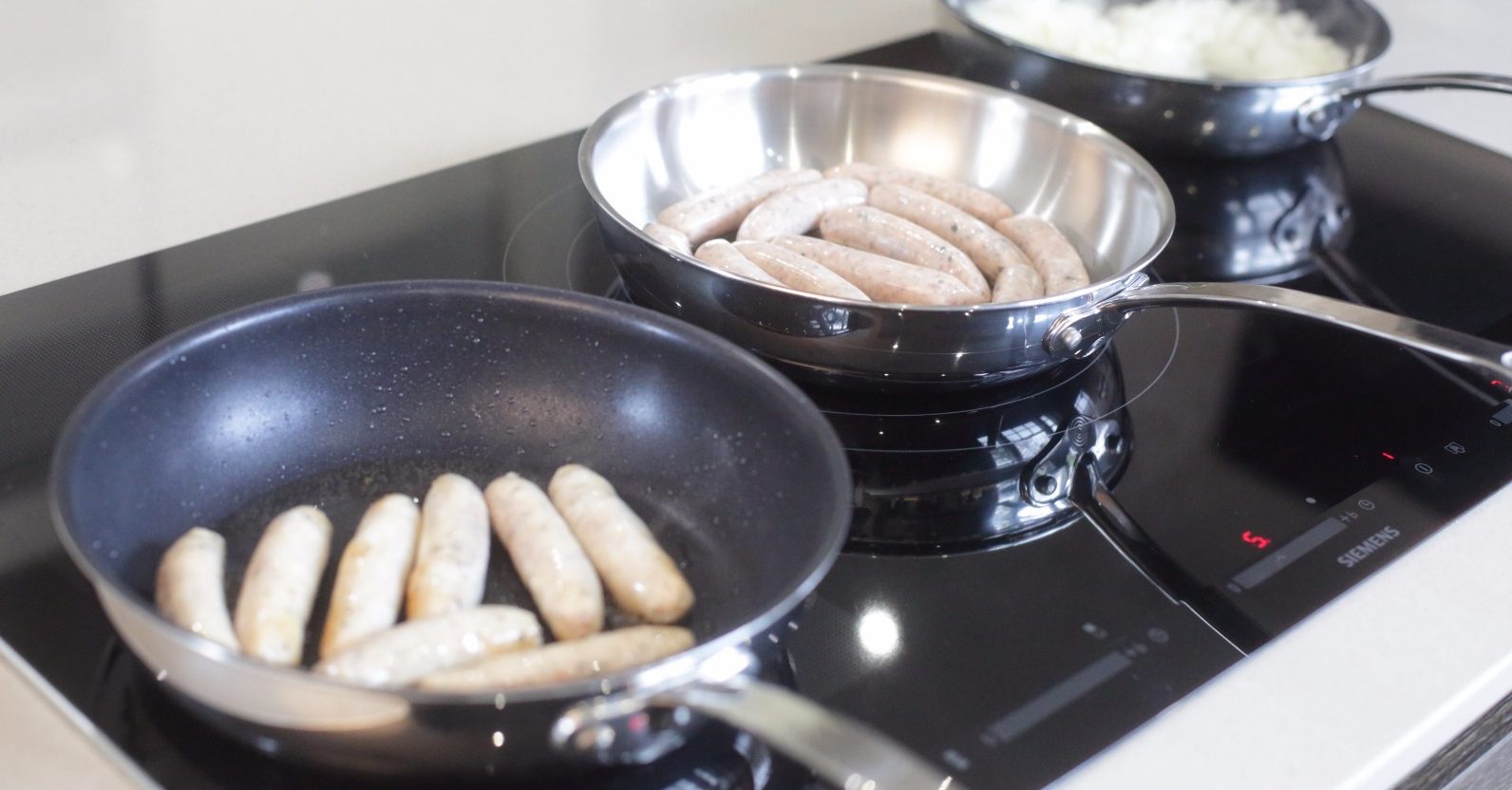
    The sausages were cooked as follows;

    Proware Stainless Steel Tri-Ply 28cm Non-Stick Frying Pan
    Hob – 30 minutes, medium/low heat

    ProWare Stainless Steel 28cm Frying Pan
    Hob – 5 minutes, medium/high heat
    Oven – 25 minutes at 180°C

    NB – Both of our Stainless Steel Tri-Ply frying pans are oven safe, however, the non-stick pan is only safe up to 200C, we therefore decided to exploit the advantage of the former for the purpose of this test and used the non-stick pan on the hob only.

    Proware Stainless Steel Tri-Ply Frying Pan Oven

    The Results

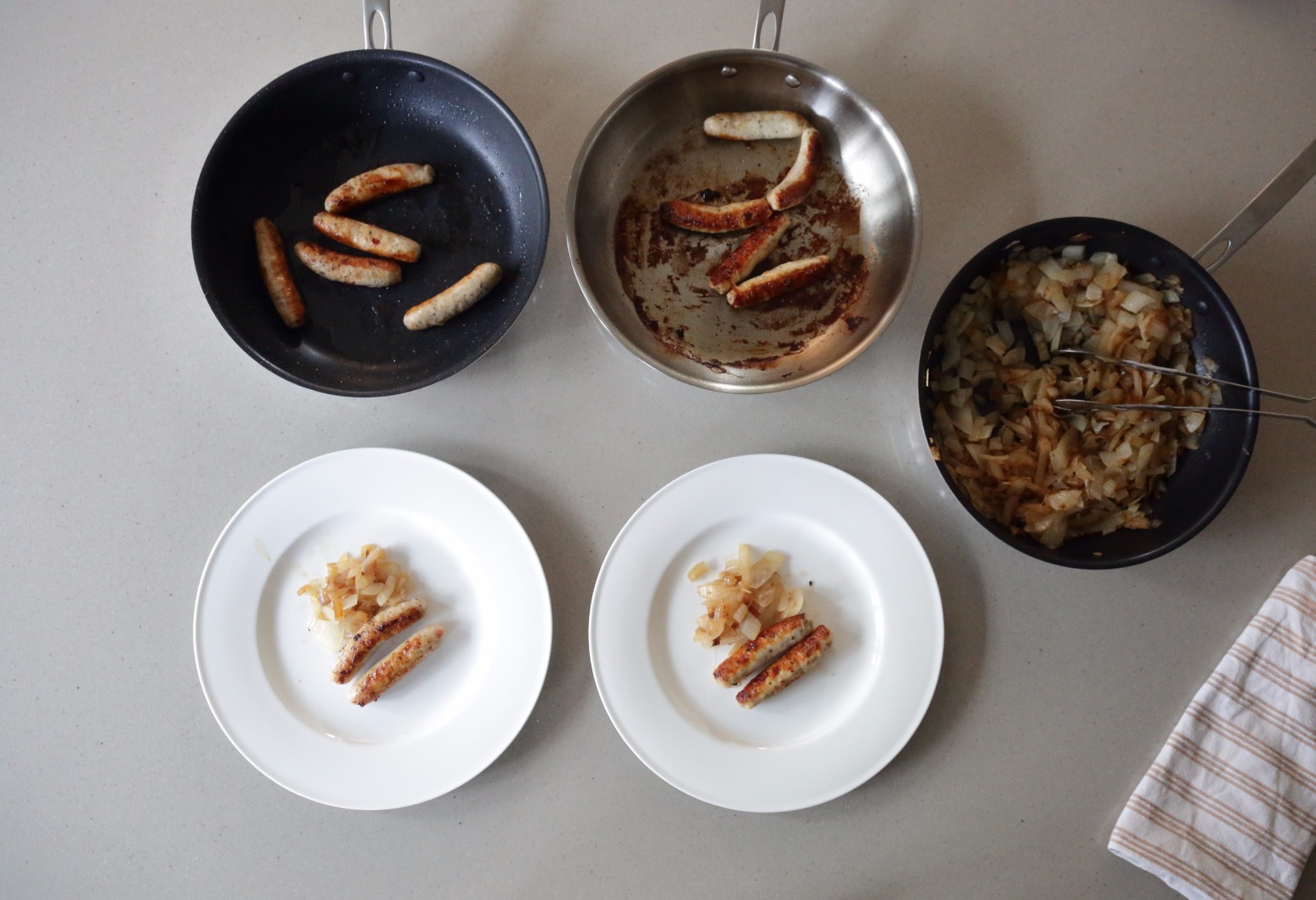
    The end results did show a difference between the two pans but in all fairness it was perhaps not as obvious as we had anticipated. The sausages in the stainless steel pan certainly did brown better which gave them a better caramelised flavour; and should you be making bangers and mash, you could have made a stonking onion gravy with the sticky juices left in pan. It would also be within the realms of possibility to add some Yorkshire pudding batter, sling it in the oven and make a toad in the hole.

    In the face of this, the non-stick pan performed admirably and held its own. Whereas the final result may not have been quite as good, for those wanting a speedy clean up and to use less oil, this would be the pan to choose.

    ProWare Stainless Steel Tri-Ply Frying Pans Results

  4. Non-Stick vs. Stainless Steel – Which is Better?

    Comments Off on Non-Stick vs. Stainless Steel – Which is Better?

    It has been over 60 years since non-stick cookware was first introduced, and since then its popularity has continued to be widespread and significant. You would likely be hard-pressed to find a household in the UK that doesn’t have at least one non-stick pan. The promise of pancakes gliding effortlessly on to your plate; the prospect of never again being stood at the kitchen sink chiselling burnt food off your favourite frying pan. The appeal was, and still is, obvious. There are some strong arguments, however, in favour of the more traditional stainless steel pans that beg the question – which is better, non-stick or not?

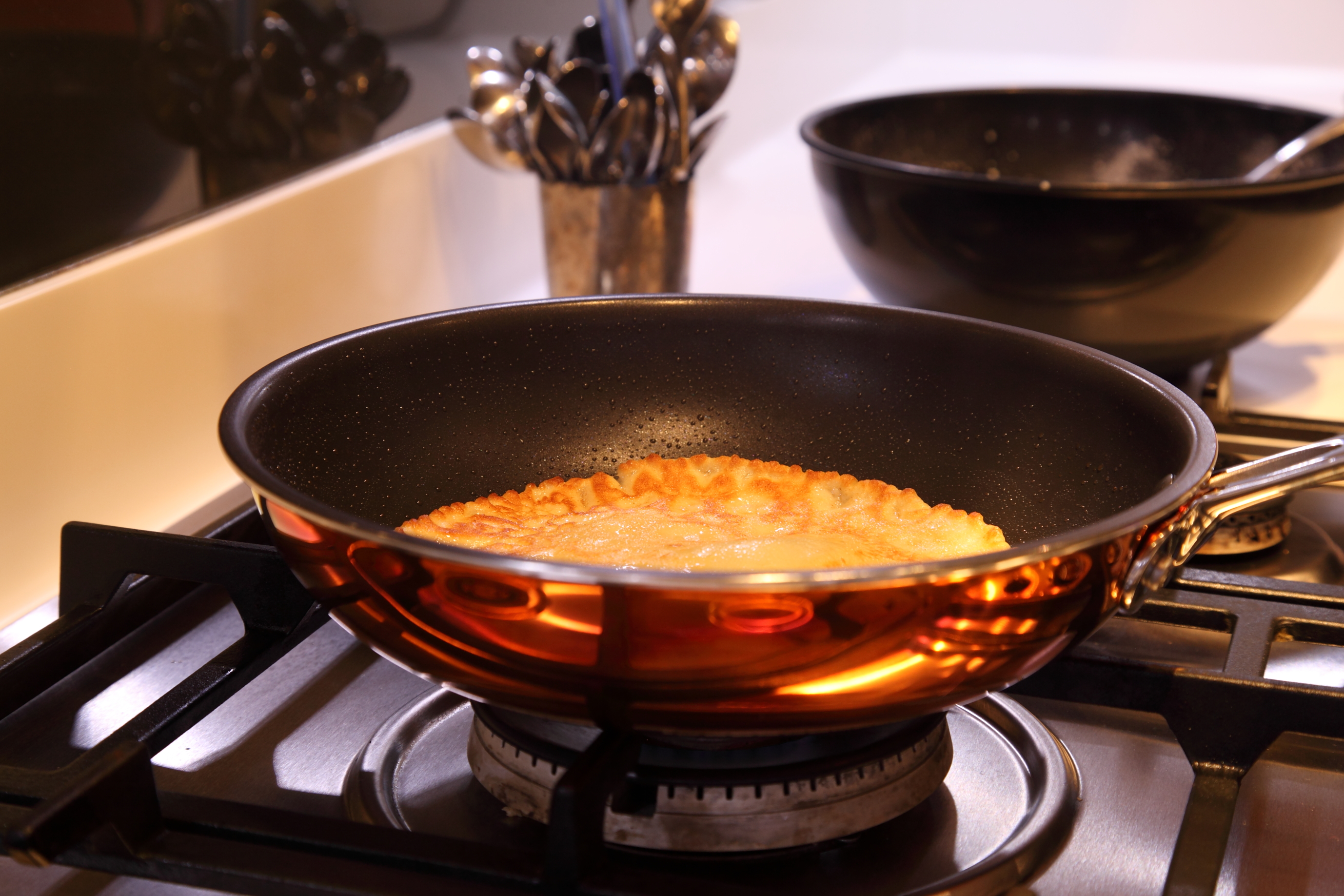
    Whatever your feelings are toward non-stick pans, it is difficult to deny their virtues in the realm of frying eggs and making pancakes. The ease with which you can produce perfect fried eggs with nothing but a drop of oil and a delicate touch make them (in our view) worth having, if just for this task alone. Also, cleaning non-stick pans is often a breeze. If you get a decent one sometimes just a wipe with a paper towel does the trick.

    ProWare Stainless Steel Tri-Ply 26cm Non-Stick Frying Pan

    ProWare Stainless Steel Tri-Ply 24cm Non-Stick Frying Pan

    Unfortunately, they do have their limitations. The main one, which every keen cook will race to share, is that when using a non-stick pan, you cannot achieve that lovely golden colour when searing meat or caramelising. For this purpose, stainless steel pans are invaluable. Another area in which stainless steel reigns supreme is the making of gravy and pan sauces, an essential part of some dishes. All the juices that are released during cooking stick to the pan, allowing you to deglaze with the desired liquid.

    ProWare Stainless Steel Tri-Ply 26cm Frying Pan

    ProWare Stainless Steel Tri-Ply 24cm Frying Pan

    Aside from culinary matters, there are also some very practical reasons why stainless steel pans are favourable. Firstly, they are generally considered to be far more durable than their non-stick counterparts due to non-stick coatings often being easily damaged and requiring careful handling (find out more about looking after your non-stick here). To ensure the longevity of our pans we use Teflon Platinum Plus, a market leading, ceramic reinforced coating that we test rigorously (check out the video here). In addition, non-stick pans can’t be preheated in the way a stainless steel one can. This is due to good non-sticks being made up of multiple layers and when a pan is heated while empty the heat has nowhere to be transferred to which can lead to the layers deteriorating.

    Many people are deterred from cooking with stainless steel because they think everything will immediately stick, burn and it will all end in a charred, greasy disaster. What they don’t know is that it will only take a bit of confidence, some practice and the right pan for it to become a walk in the park.

    A great place to start is buying a quality pan. Pans that are very thin (some basic ones are as thin as 0.4mm), are likely to develop hot-spots and will not heat evenly. It is this which leads to food being burnt in one place and underdone in another. Our ProWare 24cm Stainless Steel Frying Pan has a three-layer construction – two layers of stainless steel sandwiching a core of aluminium. The overall thickness of the pan is 3mm, resulting in a wonderful robust feel and an ability to heat very evenly. It also means, like the rest of the range, this pan is oven safe.

    Once you have your pan, the easiest way to ensure effortless, stick free cooking is to season the pan (it is worth noting that this is not essential if you are willing to use oil a bit more liberally). Seasoning will produce a thin layer on the surface of the pan which will allow you to cook without the addition of more oil, and most importantly, without your food sticking. This is how you do it:

    Seasoning Stainless Steel

    1. Ensure your pan is thoroughly clean and over a medium heat, allow the pan to heat up for 2-3 minutes.
    2. Add a tablespoon of oil (rapeseed works very well) and swirl around the pan to evenly coat the inside.
    3. Heat the oil until it begins to smoke. Once smoking, remove the pan from the heat and set aside to cool completely.
    4. Pour out the oil and wipe the inside of the pan with paper towel.
    5. Your pan is now seasoned and ready to use.

    Another useful tip when it comes to cooking with stainless steel is take your time! Do not rush and resist the temptation to constantly move your food around the pan. For example, when cooking meat, if the pan is properly preheated and the oil is hot when the steak is added you need not move it again until it is time to turn it. The meat will seal beautifully and you will be able to lift it from the pan easily, if you try to move it too soon you run the risk of tearing the flesh.

    ProWare Copper Tri-Ply 24cm Frying Pan

    The Verdict

    A conclusion we can draw in the argument of stainless steel versus non-stick, is that they both have their merits and drawbacks but it really depends on what you intend to use it for. For the more ardent cooks amongst you, we would actually recommend having one of each. Use your non-stick for things like eggs, crepes and delicate fish; and the stainless steel for just about everything else.