Tag Archive: copper

  1. 7 Things We Love About Our Copper Tri-Ply Range

    Comments Off on 7 Things We Love About Our Copper Tri-Ply Range

    Do you really need an excuse to treat yourself to a new pan collection? We say ‘no’, since when you have all the right gear in the kitchen, you’re much more likely to spend the time whipping up something delicious.

    So, to help you make an informed buying decision, we’re sharing what we love about one of our most popular pan collections. Say hello to the copper tri-ply range and discover why professionals wouldn’t be without it…

    1. Carefully Engineered

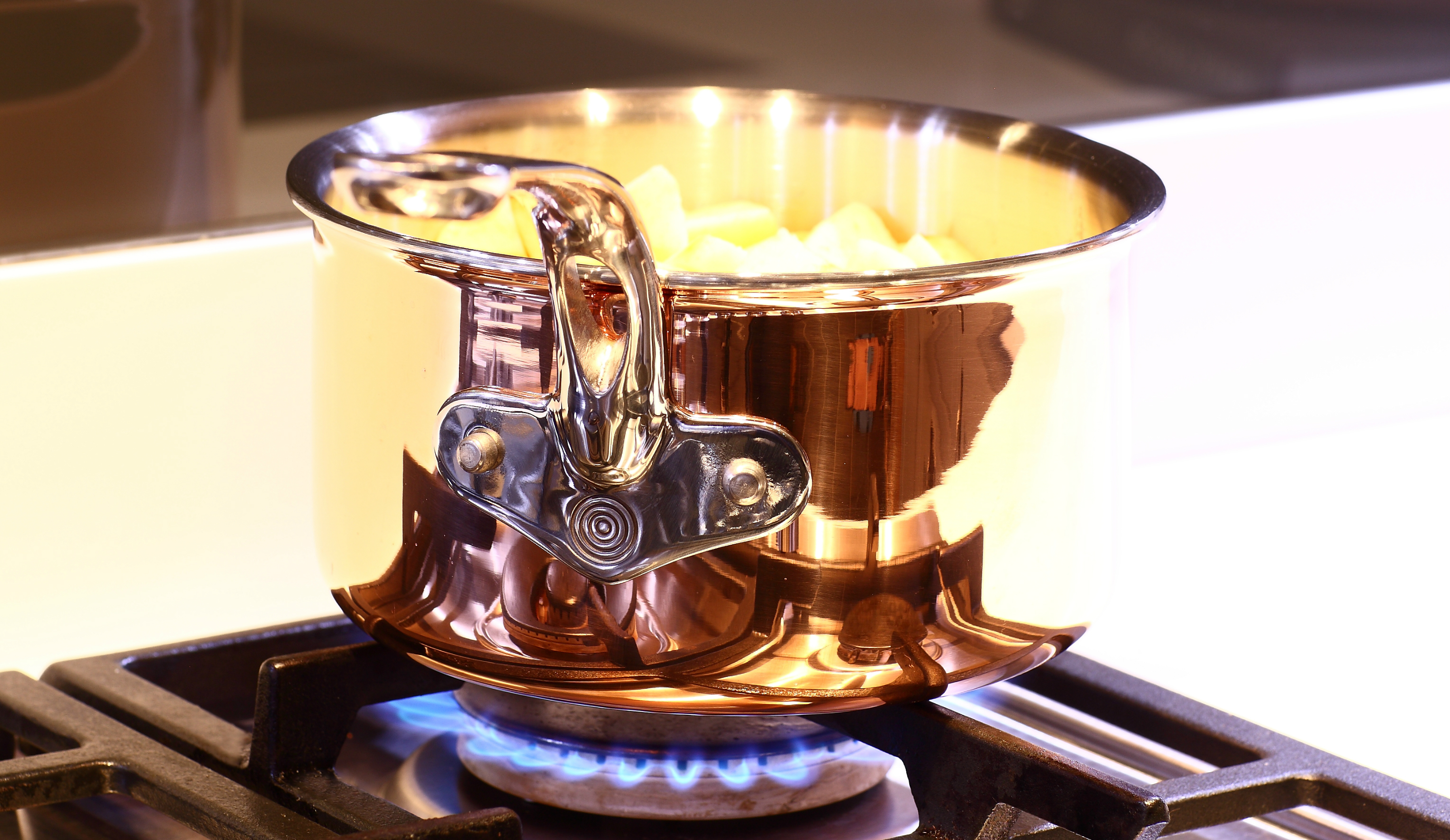
    Copper tri-ply cookware starts life as three sheets of high-grade metals: copper, aluminium and stainless steel. The metals are bonded together and deep drawn into a single piece body, meaning that each material delivers it’s benefit throughout the entirety of the pan.

    The cast stainless steel handle is attached using stainless steel rivets, inserted under 600 tonnes of pressure – so you can be sure that you will never again have a wobbly handle!

    2. Made for Efficiency

    If you want efficiency in the kitchen, this range of pans certainly offers it. Working together the copper exterior and aluminium core distribute heat efficiently and evenly. The construction allows you to moderate the heat settings you use during cooking, reducing the amount of energy required to achieve a rolling boil. As a result of the even cook they really are the ideal range for more intricate cooking -they work beautifully for preparing gravies, reducing jus or caramelising sugars.
    ProWare Copper Tri-ply Cookware

    3. Performance is Guaranteed

    The pans in this range are so robust and deliver such great results that professional chefs love using them. With its timeless aesthetic and practical design, the copper tri-ply collection is a great choice for anyone who takes preparing food seriously.

    As a result of the selection and management of materials and production; our extensive in-house testing and our real life experience we are confident to offer a lifetime guarantee. This cookware will see you though a life time of cooking and could even be passed on as heirlooms.

    4. Versatile

    The copper tri-ply range offers optimum versatility and practicality as the pans are all oven and dishwasher safe. This makes them perfect for transferring from hob-to-oven and even oven-to-table (well, they are such handsome devils!). Dishwasher suitability makes the tidy-up so much simpler too.

    ProWare Copper Tri-Ply Saute Pan with Steak

    Let our recipes inspire you: Cote de Beouf and My Mum’s Kedgeree

    5. Thoughtfully Designed

    We have incorporated several design aspects in to these pans to make them not only beautiful but dynamically functional. A steep arch in the handle makes the items easier to handle; it keeps the handle away from the heat source; and, allows the pans to nest efficiently in cupboards or drawers. An eyelet where the handle meets the pan body disperses heat to ensure handles don’t get too hot and a hanging loop enables the pans to be elegantly displayed in your kitchen. We also know that larger pans can be very heavy when full. That’s why we have added helper handles to the 18cm and 20cm saucepans, and the 24cm sauté pan.

    6. Simply Stunning

    So many of our customers tell us they can’t wait to display their pans as soon as they get them home. The great thing about making the range a feature of your space is that you can either let the copper age naturally, admiring the beautiful character develop or, you can use Brasso or a salt and white wine vinegar solution to restore the copper to its fabulous, warm glow.

    ProWare Trade

    Read more about how to clean your copper tri-ply cookware.

    7. Collectable and Giftable

    The copper tri-ply is our biggest range. From the mini pans through to the sauté pans and 24cm stockpots – there is something for everyone. Each and every piece is an absolute showstopper and if you are considering these as a gift for new home-owners, newly-weds or a keen home cook, they are sure to raise a smile and deliver a lifetime of kitchen bliss ( … OK, we can’t guarantee that bit!).

    Take a look at why we think cookware makes a perfect wedding gift.

  2. Why We Offer a Lifetime Guarantee

    Comments Off on Why We Offer a Lifetime Guarantee

    ‘They don’t make ‘em like they used to’

    This is a phrase that is thrown around all over the place these days. Whether its chocolate bars getting smaller or washing machines packing in after just a few years, it is becoming more evident that everyday items are gradually transforming into shadows of their former selves.

    The cost of raw materials is increasing. As is the pressure to be competitive in a market saturated with products and outlets. It is therefore understandable that companies are de-spec’ing their products in order to make their production viable and profitable. An unfortunate downside of this is that product quality and longevity suffer, making items less durable in a society that is becoming increasingly throwaway.

    Brands that continue to manufacture a product designed to last, who are unwilling to sacrifice quality to participate in a race to be cheapest and are now something of a rarity. We believe ProWare to be an example of such a brand.

    ProWare at The Milestone

    Our cookware is used daily in professional kitchens

    ‘What would we want in our own kitchen?’

    When developing our products, we wanted the result to be something we would be willing to buy ourselves, that would satisfy our appetites for quality and value.

    For this reason, we went above and beyond when specifying our cookware. The Tri-Ply ranges have a minimum wall thickness of 2.5mm (up to 3mm in the Copper Tri-Ply). This is more than six times that of some commercially available items. The handles on all our pan ranges are cast stainless steel, as are the rivets used to attach them. Securing the handle with stainless steel rivets requires 200 tonnes of pressure and ensures the handle will never loosen. Most manufacturers use aluminium rivets, which are fastened using only 45 tonnes of pressure due to aluminium being a softer metal than stainless steel. This is considered a more cost effective choice but aluminium can deform as a result of sustained stress or frequent jarring. This can cause handles to loosen with time.

    Perhaps the most vunerable part of any pot or pan is the interior. It is this surface that will be exposed to the most hostile conditions. The interior of a pan will regularly come in to contact with three potentially destructive elements; moisture, heat and acidity. These can combine to become detrimental to some metals over time so it is essential the correct ones are used. That is why we use 18/10 grade stainless steel for the interiors of all our pans. The name refers to the chromium and nickel contents of the steel. This is considered the highest grade of stainless steel in domestic use and is noted for its excellent resistance to corrosion.

    You can find out more about the construction of our pans here.

    Buy well, buy once

    We are confident in the knowledge that we have done everything possible to make our pans as good as they can be. It is this which allows us to offer a lifetime guarantee across all ranges with the exception of our non-stick items. The non-stick we use is Teflon Platinum Plus, a market leader renowned for its toughness and longevity. As good as it may be, it will not last forever.

    We hope you can share our faith in the cookware we produce and that you can make a purchase knowing it will stay with you through decades of use to be passed on to future generations.

  3. Cooking with Copper: A Brief History

    Comments Off on Cooking with Copper: A Brief History

    It is no secret that copper is currently experiencing a huge upsurge in popularity. This is mainly thanks to its beautiful colour featuring heavily in the ranges of countless homeware retailers. There is, however, far more to this lustrous metal than just its appearance.

    For example, it has a greater level of thermal conductivity than any other metal (except silver); roughly 60% higher than aluminium and 3000% higher than stainless steel. This means copper is capable of heating up very quickly when compared to other metals.

    Perhaps a less commonly known property of copper is it being inherently antimicrobial. A wide range of harmful microbes are unable to survive for more than a couple of hours when in contact with a surface made of copper or one of its alloys (brass and bronze). This has led to it often being used for frequently touched surfaces such as door knobs, push plates and taps.

    A seemingly perfect material for cooking, it is therefore no surprise that it has been used in kitchens for millennia. But exactly when did we learn to utilise copper and its valuable assets?

    Origins

    It is hard to pin down an exact date when copper cookware was first introduced. Pieces discovered in regions of the middle east were dated as far back as 9000BC, suggesting cooking with copper began during the Neolithic period (≈10000-2000BC). As civilisations became increasingly capable in metallurgical techniques, metals such as copper became more widely used. It would have been around this time that copper replaced stone as the material used for making tools and cooking vessels.

    The use of copper is also well documented in Ancient Egypt. Not only was it used to produce water and oil containers, but it was also used to in medical practices. The antimicrobial nature of copper was exploited long before the concept of microorganisms was fully understood. The Smith Papyrus, a medical text written between 2600 and 2200BC records the use of copper in sterilising wounds and drinking water.

    Tin Lining

    Although copper is essential to many processes within the human body, it can become toxic if consumed in excess. It was this knowledge that gave rise to lining cookware with tin, a technique used for hundreds of years to prevent copper leaching in to food.

    These tin linings would eventually wear out and during the 18th and 19th century, it was common for people to send pans away to be re-tinned. This practice is becoming increasingly rare, as are the craftsmen who perform it. Despite this, there are still manufactures producing tin-lined copper cookware who also offer a re-lining service. Perhaps the best known of these is Mauviel, a French manufacturer who have been making this type of cookware since 1830.

    Tin has now largely been replaced by stainless steel as an interior cooking surface. Not only is it more cost effective, but the high grade of stainless steel used in premium cookware (typically 18/10) is highly resistant to corrosion and more durable than tin.

    Copper Base

    Another way in which the virtues of copper have been combined with those of stainless steel is in copper base cookware. A base plate made from a layer copper and aluminium is fused to a stainless steel body. This is done using a process called impact bonding using 600 tonnes of pressure.

    The high conductivity of copper means the base of the pan will heat much more evenly, reducing the formation of hot spots. Modern 3 ply copper cookware effectively extends this base construction up the sides of the pan also.

    Tri-Ply

    As manufacturing processes advanced it became possible to combine different materials to produce cookware made up of three distinct layers, each possessing their own unique properties. These are as follows;

    1st Layer – Copper

    Very high thermal conductivity allows the entire outer surface to heat rapidly and evenly.

    2nd Layer – Aluminium

    Provides a lightweight core with excellent thermal retention.

    3rd Layer – Stainless Steel

    An inert and highly durable cooking surface.


    Copper Tri-Ply Construction

    It is this type of construction that is used by ProWare to produce our Copper Tri-Ply cookware. You can find out more about how these pans are made here.

  4. Lamb Rogan Josh with Spice Kitchen

    Comments Off on Lamb Rogan Josh with Spice Kitchen

    Spice Kitchen are an award-winning artisan producer of tea and spice blends based in Walsall. They have a excellent range of small batch, freshly ground spices great for keen home cooks. In addition to this they sell products for tea aficionados and have some wonderful gift ideas.

    They were kind enough to send us two of their spice tins, containing 10 Indian spices with 7 individual spice pots, wrapped in a beautiful handmade silk sari wrap.

    We have used the spices from their Indian Spice Tin to make a fantastic Lamb Rogan Josh. Lamb Rogan Josh is an old family favourite of ours and for the longest time the version in Madhur Jaffrey’s Indian Cookery was our go-to dish for an easy Saturday night.

    The dish originates from Kashmir and can be made using beef or lamb. In researching this version, we saw a suggestion that the meat could be substituted for cauliflower – though cooking times would obviously be significantly reduced!

    Part of the faff of making this dish was sorting through the spice cupboard or having to pop out to the supermarket. Thanks to Spice Kitchen almost all of the ingredients were easily to hand in the spice tin.

    The dish is even better if it is prepared ahead of time and the sweet yellow rice is a perfect accompaniment if you have the time!

    ProWare Beef Rogan Josh Spice Kitchen

    Lamb Rogan Josh

    Serves: 4 (easily doubled)

    Prep time: 20 minutes

    Cooking time: 2hr 15 minutes


    Equipment


    Ingredients

    • 4tbsp vegetable oil
    • 5cm piece fresh ginger
    • 8 cloves garlic, peeled
    • 10 cardamom pods, whole
    • 2 curry leaves
    • 6 cloves, whole
    • 10 peppercorns, whole
    • 1 cinnamon stick
    • 2 tsp cumin seeds, ground
    • 2 tsp ground coriander
    • 2 tsp paprika
    • 1 tsp cayenne pepper
    • 1 tsp salt
    • 0.5 tsp garam masala
    • 900g rolled lamb shoulder, cut in to 2cm cubes
    • 200g onions, peeled and finely sliced
    • 6 tbsp natural yoghurt

    Cooking Method

    1. Using a blender, combine the ginger, garlic and 4 tbsp water into a smooth paste.
    2. Heat the oil in a wide, heavy pot over a medium-high heat and brown the meat in several batches. Set to one side.
    3. Add the cardamom, bay leaves, cloves, peppercorns and cinnamon to the hot oil, stir once and wait until the cloves swell and the bay takes on colour. Then add the onions and fry for 5 minutes until they brown.
    4. Add ginger paste and fry for 30 seconds. Mix in the coriander, cumin, paprika and cayenne; then add the fried meat and juices and stir for 30 seconds.
    5. Add 1 tbsp of the yoghurt and stir until it is well blended. Add the remaining yoghurt, a tablespoon at a time, stirring in between.
    6. Cook for a further 3-4 minutes then add 425ml water and bring to the boil.
    7. Cover and turn heat to low. Simmer for 2 hours or until meat is tender. Alternatively, cook in oven at 180C. Stir every 15 minutes or so.
    8. When the meat is tender, turn the heat up, remove the lid and boil off some liquid.
    9. Before serving, skim off as much fat as you can from the top and sprinkle with garam masala and some freshly ground black pepper.

    Sweet Yellow Rice (Meetha Pullao)

    Serves: 4 (easily doubled)

    Prep time: 3hr 25 minutes

    Cooking time: 1hr 10 minutes


    Ingredients

    • 1/2 tsp saffron threads
    • 2 tbsp whole milk, warm
    • 200g basmati rice
    • 3 tbsp ghee or butter
    • 4 green cardamom pods
    • 1 cinnamon stick
    • 1/2 tesp salt
    • 15g flaked almonds
    • 1tbsp sultanas
    • 90g caster sugar

    Equipment


    Cooking Method

    1.  Using a frying pan, toast the saffron over a medium heat until the threads turn slightly darker.
    2. Put the milk in a cup and crumble in the saffron. Set aside for 3 hours.
    3. Wash the rice, changing the water 3 times, then drain. Leave it to soak in 1.2 litres of water for 30 minutes. Drain and leave in the colander for 20 minutes.
    4. Preheat the oven to 150°C/300°F/gas mark 2.
    5. Heat the ghee over a medium heat in a wide, oven-proof pan. When it’s hot, add the cardamom and cinnamon and stir. Add the rice and stir.
    6. Sauté the rice gently for about 3 minutes, reducing the heat slightly if it begins to catch. Add 325 ml of water and the salt.
    7. Increase the heat back to medium and gently stir. Cook the rice until all the water is absorbed.
    8. Pour in the saffron milk and stir in the almonds, sultanas and sugar. Cover very tightly and put the pan in the oven for 30 minutes.
    9. Remove the rice from the oven and stir. Remove the cardamom and cinnamon. Sprinkle with the extra sultanas and almonds to serve.

    Spice Kitchen™ - Spices, Spice Blends, Gifts & Cookware

    spicekitchenuk.com
    soldwithlove@spicekitchenuk.com